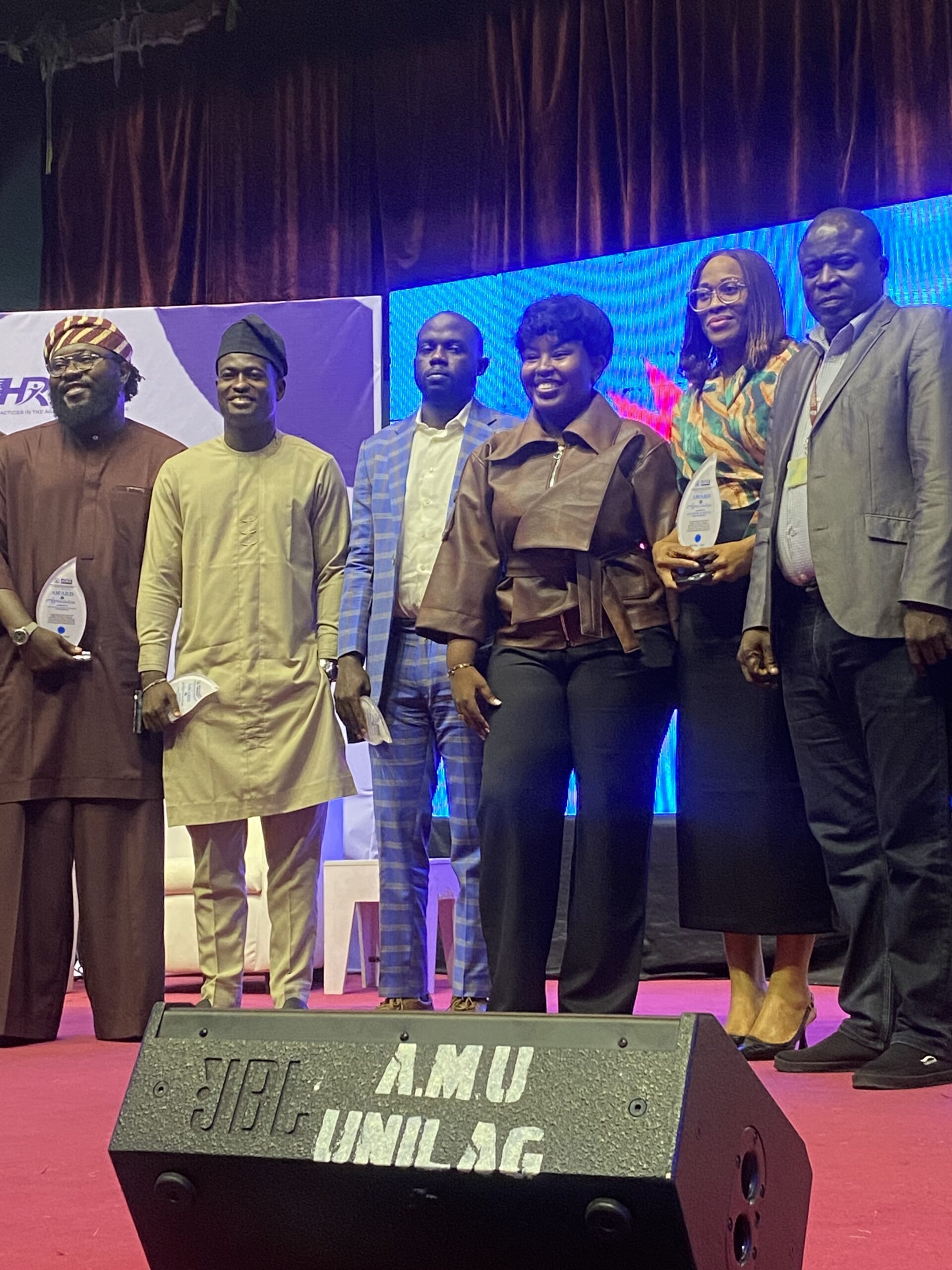
Human resource professionals, business leaders, and academics have urged organisations and HR practitioners to embrace data, artificial intelligence (AI), continuous learning, and people-centred leadership as the world of work continues to evolve.
The call was made on Tuesday at the fifth edition of the EDGE Conference, organised by the Employment Relations and Human Resource Management Students’ Association (ERHRMSA), University of Lagos, at the J.F. Ade Ajayi Auditorium.
The conference, themed HR in Motion: People Practices in the Age of Continuous Change, brought together students, HR professionals, business leaders, and academics to examine how organisations can respond to changing workforce expectations, rapid technological advancement, and new ways of working, while preparing the next generation of HR leaders.
The event featured a keynote address and two panel sessions exploring agile leadership, multigenerational workplaces, and the growing role of technology in human resource management.
Delivering the keynote address, HR Business Partner, Commercial and Supply Chain at Crown Flour Mill Limited (Olam Agri), Elizabeth Onifade, said the HR profession has evolved from an administrative function into a strategic business partner responsible for driving organisational growth and performance.
Reflecting on her career journey, Onifade said she joined Olam Agri as a graduate trainee after being selected through the company’s graduate trainee programme at the University of Lagos. She noted that her early experiences demonstrated that modern HR demands analytical thinking, negotiation skills, and a sound understanding of business operations.
“The HR landscape has changed very fast,” she said. “HR is no longer just about hiring and firing people. Business leaders want HR professionals who understand how the business makes money, how costs are managed, and how people’s decisions contribute directly to organisational success.”
According to Onifade, data has become the new currency of HR, making analytical capability an essential skill for anyone seeking a successful career in the profession.
“If you don’t like data, Excel, or analytics, you need to start learning them now because HR decisions today are driven by people analytics,” she said.
She explained that organisations increasingly rely on dashboards, workforce analytics, and digital tools to support decision-making, adding that AI and automation have transformed HR functions ranging from recruitment to employee management.
Onifade also observed that workplace expectations have changed significantly, with hybrid working, remote working, and project-based employment becoming increasingly common. She noted that employers now place greater value on specialised skills and measurable outcomes than on rigid workplace traditions.
She encouraged students to begin developing practical skills while still at university by mastering digital tools, joining professional HR communities, and taking advantage of conferences and mentoring opportunities.
Speaking on career development, Onifade described the National Youth Service Corps (NYSC) programme as an important career launch pad rather than merely a compulsory national service scheme.
“Treat NYSC as your first real job. Be curious, ask questions, volunteer for projects, and use the opportunity to build experience and relationships that can shape your career,” she said.
She also encouraged aspiring HR professionals to begin their careers as HR generalists in order to gain broad exposure across multiple HR functions before choosing an area of specialisation, while emphasising the importance of mentorship.
During the first panel session, titled The Agile HR Leader: Navigating Work, Technology and People in Constant Motion, Managing Director of Energy Training Centre, Ibiene Okeleke, said agility in HR requires organisations to develop flexible systems that respond quickly to changing business and employee needs without compromising accountability.
Okeleke said organisations should move away from rigid workplace practices and instead adopt people-centred processes that promote both productivity and adaptability.
“An agile workplace is one that is responsive to change. Whether employees work remotely, on-site, or in hybrid arrangements, organisations must remain focused on achieving results while creating flexible systems that work for their people,” she said.
Founder and Chief Executive Officer of Background Check International, Dr. Kola Olugbodi, said the COVID-19 pandemic permanently transformed organisational operations by accelerating the adoption of technology and remote working.
According to Olugbodi, AI has reshaped recruitment, performance management, and other HR functions by reducing bias and improving the transparency of decision-making.
“HR today is more strategic than ever before. Technology has changed recruitment, performance management, and the way organisations measure productivity. Organisations now reward performance and innovation rather than simply years of service,” Olugbodi said.
He also noted that younger generations are reshaping workplace culture by challenging outdated practices and introducing new approaches to work.
Head of Human Capital at Linkage Assurance Plc, Ohi Alufohai, urged HR professionals to remain focused on organisational purpose while embracing change.
She said organisations should avoid reacting to every emerging trend and instead align workplace transformation with their long-term strategy and core values.
“As HR leaders, we must anticipate change rather than wait for it. At the centre of every transformation are people, and continuous learning is essential if organisations want their workforce to remain competitive,” she said.
Director-General of the Lagos State Public Service Staff Development Centre, Adekunmilola Adio-Moses, said recruiting talented young professionals has helped drive innovation and accelerate digital transformation within the organisation.
He explained that the addition of highly skilled young employees has strengthened the centre’s technological capabilities while creating greater opportunities for collaboration and innovation.
The second panel session, titled Generations in Motion: Redefining People Practices Across a Changing Workforce, examined how organisations can effectively manage an increasingly multigenerational workforce.
Founder and Chief Executive Officer of Dear HR Consulting and Convener of the African Workforce Summit, Joel Moses Babatunde, popularly known as OgaHR, said the growing preference for remote work and virtual interviews reflects changing workplace realities rather than a lack of commitment.
He advised job seekers to seek employers whose workplace culture aligns with their expectations, while encouraging organisations to build systems that support flexible working wherever possible.
“The world of work changed after COVID-19. Many organisations still lack the infrastructure to support remote work, but flexibility is no longer a luxury. It has become part of how modern workplaces operate,” he said.
Senior Talent Acquisition Partner, Emmanuel Samuel, said empathy has become one of the most important leadership qualities in today’s workplace because employees now have more career choices than ever before.
He said organisations should recognise the practical challenges employees face, including long commuting hours, traffic congestion, and flooding, when designing workplace policies.
According to Samuel, line managers and HR professionals should foster supportive workplace cultures through coaching conversations rather than relying solely on rigid policies.
Also speaking, Strategic HR Lead at FSDH Holding Company, Olukemi Ifekoya, said increasing awareness of employee rights is reshaping workplace relationships.
She noted that employees now expect transparency, fairness, and respect from employers, adding that organisations must build cultures founded on trust, inclusion, and meaningful employee engagement.
“If people feel respected and connected to the purpose of an organisation, they are more likely to remain committed. HR should build systems that support both business performance and employee well-being,” Ifekoya said.
The conference concluded with speakers encouraging students, HR practitioners, and organisations to embrace lifelong learning, strengthen their digital and analytical capabilities, leverage AI responsibly, and remain adaptable as the workplace continues to evolve.
They agreed that while technology is transforming workplaces, people will remain at the centre of organisational success, making empathy, innovation, strategic thinking, and continuous learning indispensable to the future of human resource management.