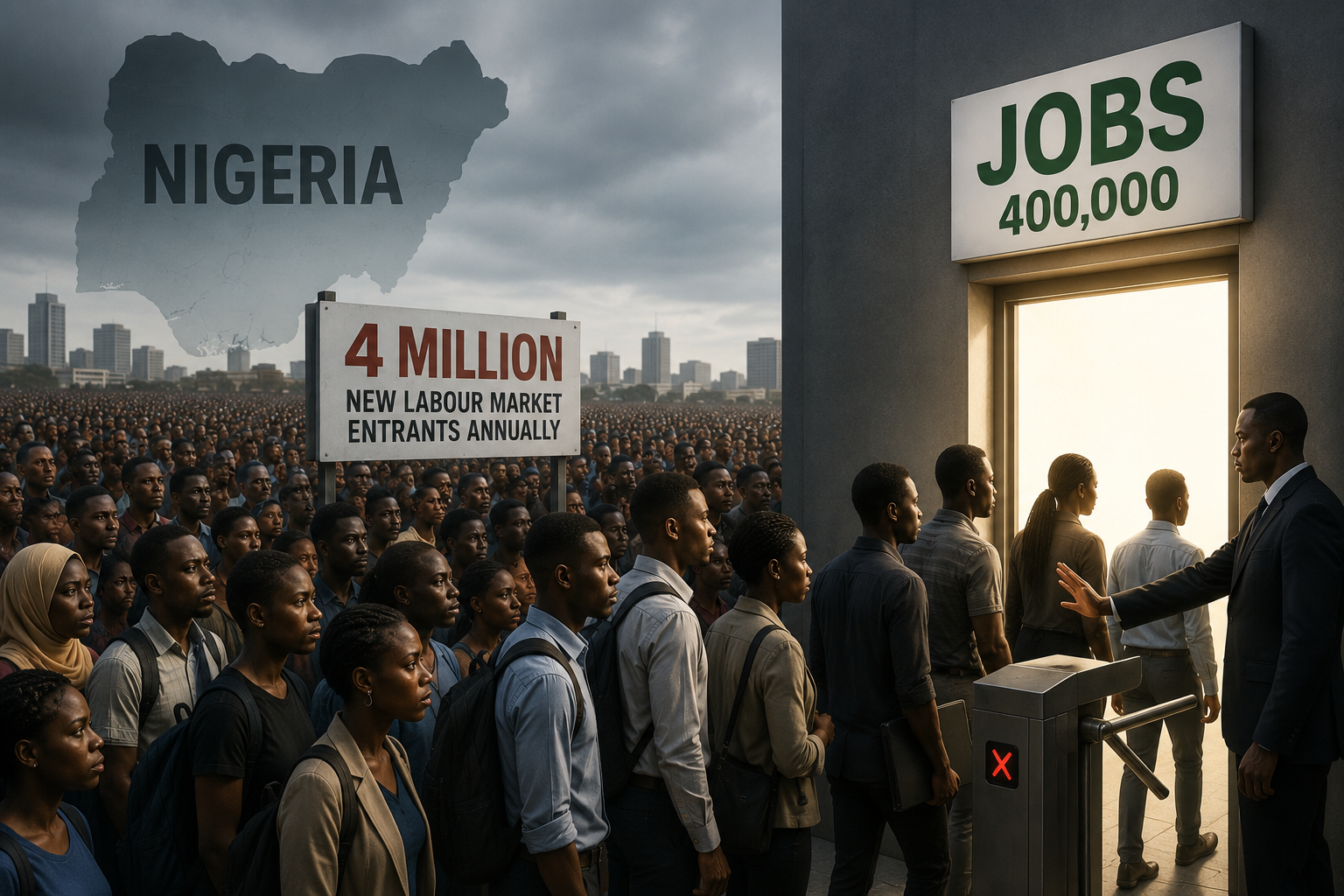
Nigeria’s youth unemployment crisis is deepening as approximately four million young people enter the labour market annually, while the economy generates only between 300,000 and 400,000 jobs each year, stakeholders have warned.
The concern was raised during African Foundational Week (AFW) Youth Week, where government officials, development partners, youth advocates, and entrepreneurs called for urgent measures to expand employment opportunities, bridge skills gaps, and improve access to economic opportunities for young Nigerians.
The event, themed “Youth Works, Africa Thrives,” was held across six Central African countries, including Nigeria.
Speaking at the event, World Bank Operations Manager for Nigeria, Taimur Samad, said the widening gap between labour market entrants and available jobs poses a serious threat to Nigeria’s economic and social stability.
According to him, World Bank analysis indicates that around four million Nigerian youths join the labour force every year, while only a fraction secure productive employment.
“Whether it is 300,000, 400,000 or 500,000 jobs, there is still a massive gap between the number of youth entering the labour force every year and the number that have productive paid employment. That is scary for any society,” Samad said.
He stressed that sustainable job creation remains critical to improving living standards and reducing poverty, noting that private-sector employment offers the most viable path to prosperity for young people.
Samad disclosed that job creation has become a central pillar of the World Bank’s Country Partnership Framework for Nigeria, with interventions focused on macroeconomic reforms, infrastructure, energy, digital connectivity, human capital development, and skills acquisition.
He added that the institution is collaborating with the government on a comprehensive skills development programme aimed at helping young people transition successfully into the labour market.
Also speaking, World Bank International Development Association Youth Champion, Hassana Maina, described youth unemployment and underemployment as among the most pressing development challenges confronting Nigeria and the wider African continent.
According to her, global projections indicate that about 1.2 billion young people will enter the labour market over the next decade, while substantially fewer jobs are expected to be created.
“The conversation was needed yesterday, not even today,” Maina said.
“How do we ensure that we are able to look at this development issue of our time and find solutions to it? We are already feeling the effects of unemployment and underemployment in Nigeria.”
She noted that, beyond access to finance, limited access to information, opportunities, and professional networks continues to prevent many young people from securing employment or building successful businesses.
“Sometimes the problem is not just access to finance. Sometimes it is access to information. Some people do not even know these opportunities exist,” she said.
Maina called for greater efforts to democratise access to information and opportunities, arguing that many young people remain excluded from development programmes because they lack awareness or access to relevant networks.
She also underscored the importance of youth representation in policymaking, noting that inadequate mentorship, sponsorship, and access to decision-making platforms often prevent issues affecting young people from being adequately addressed.
Nigeria’s Minister of Youth Development, Ayodele Olawande, said the country’s employment challenge extends beyond the availability of jobs and is closely linked to skills mismatches, limited access to finance, and changing labour market realities.
“The future of our economy depends on young people,” the minister said.
He noted that nearly 70 per cent of Nigeria’s population is below the age of 35, making investment in youth development essential to national growth and economic competitiveness.
According to Olawande, academic qualifications alone no longer guarantee employment in a rapidly changing economy.
“The certificate is not enough. What matters today is access to skills and access to opportunities,” he said.
He identified technology, agriculture, manufacturing, entrepreneurship, sports, and the creative economy as sectors with significant job creation potential.
Olawande also stressed that government cannot address the unemployment crisis alone and called for stronger collaboration among the private sector, development institutions, and young people.
“The government cannot create jobs alone. We need partnerships with the private sector, development institutions and young people themselves to create opportunities,” he said.
Participants at the event called for coordinated efforts to tackle unemployment, strengthen skills development, expand access to finance, and better prepare young people for the future of work.
They warned that without urgent interventions, millions of young Nigerians risk being left behind in an increasingly competitive labour market, with potentially serious implications for economic growth and social stability.