The International Labour Organization (ILO) has endorsed renewed commitments by Group of Seven (G7) Labour and Employment Ministers to promote quality jobs, strengthen worker protections, and advance decent work standards as labour markets face mounting disruption from technology, economic uncertainty, and changing workforce demands.
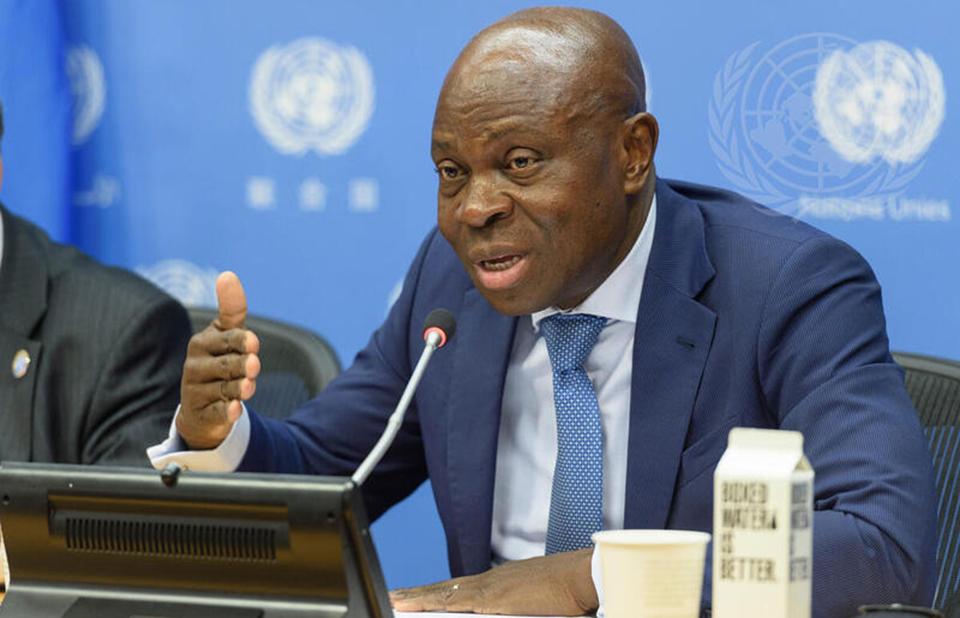
ILO Director-General Gilbert Houngbo expressed support for the initiative during a ministerial meeting convened by Jean-Pierre Farandou on the sidelines of the International Labour Conference at the ILO headquarters.
The meeting brought together labour ministers from G7 member countries and representatives of the European Commission to discuss strategies for addressing workforce displacement risks, skills shortages, and labour rights concerns arising from rapid technological change.
Speaking during the session, Houngbo said labour markets worldwide are undergoing profound transformation driven by technological innovation, economic pressures, and widening global imbalances.
He stressed that governments must ensure economic progress does not come at the expense of workers’ rights and social protection.
“Economic transformation must go hand in hand with social justice,” he said.
For workers, the discussions focused heavily on ensuring that employment opportunities created by emerging technologies are accompanied by adequate training, fair working conditions, and stronger labour protections.
Houngbo welcomed the G7’s endorsement of initiatives aimed at strengthening decent work frameworks, including a standards-based toolkit intended to help governments and businesses identify and address forced labour risks associated with the extraction of critical minerals.
The issue has become increasingly significant as demand rises for minerals used in clean energy technologies, electric vehicles, and digital infrastructure.
“As the demand for critical minerals rises, we face the risk of an increase in forced labour and other forms of labour exploitation,” Houngbo said.
“The critical minerals that underpin the economies of the future must be grounded in decent work and respect for fundamental principles and rights at work.”
He also commended efforts to enhance protections for migrant workers through a fair recruitment toolkit designed to prevent exploitation and strengthen safeguards within cross-border labour mobility systems.
According to the ILO, migrant workers remain particularly vulnerable to recruitment abuses, especially in sectors characterised by complex subcontracting arrangements and weak regulatory oversight.
The G7 ministers reaffirmed their commitment to strengthening labour standards as the foundation of resilient economies and fair competition. They also agreed to deepen cooperation on skills development, labour mobility, career progression, and workforce participation across different age groups.
One of the key proposals emerging from the meeting was the establishment of a “G7 AI Training Hub”, aimed at equipping workers with the skills needed to adapt to artificial intelligence and other emerging technologies.
The initiative is expected to support workers facing changing job requirements and help ensure that productivity gains from artificial intelligence are shared more broadly across labour markets.
Houngbo said the ILO stands ready to support implementation of the agreed initiatives, noting that international cooperation will be essential to building labour markets that balance competitiveness with social protection.
The discussions come amid growing global concerns about the impact of automation, artificial intelligence, and economic uncertainty on jobs, as policymakers increasingly seek ways to equip workers with new skills while safeguarding labour rights and employment standards.