The clamour for a new national minimum wage by organised labour is facing fresh conditions from employers, who say any review must be tied to economic realities and business sustainability.
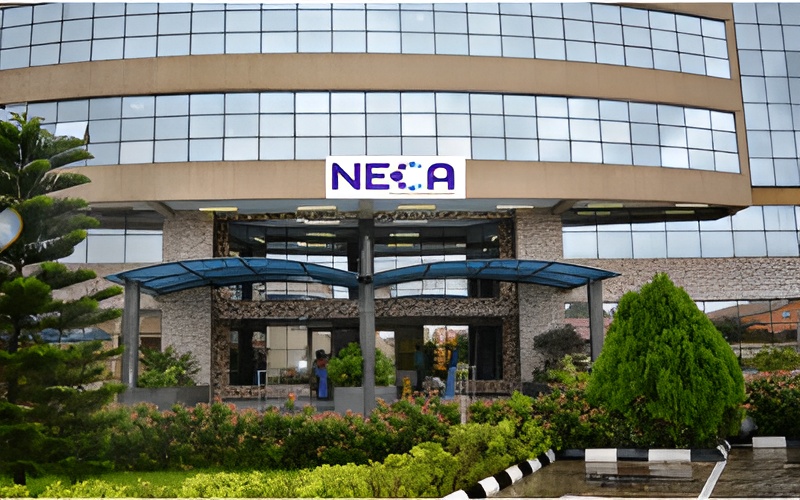
The Nigeria Employers’ Consultative Association (NECA) said on Thursday that a credible wage benchmark cannot be fixed on workers’ welfare alone, but must also reflect the cost of living, productivity, companies’ ability to pay and the need to protect existing jobs.
In a statement, NECA’s Director-General, Adewale Oyerinde, said the association recognises the pressure Nigerian workers are facing due to rising prices and reduced purchasing power.
For workers, however, the concern remains survival. With inflation, high transport costs and escalating food prices, labour centres argue that the current ₦70,000 minimum wage has been eroded and can no longer cover basic living expenses. This is driving fresh demands for a significant increase.
Responding to the ongoing talks between government and labour, NECA insisted that the process must not be reduced to a two-way discussion.
“The determination of the National Minimum Wage is fundamentally a Tripartite process that must involve Government, Employers and Workers as equal Social Partners,” NECA said.
The association cited International Labour Organisation (ILO) conventions, including the Minimum Wage Fixing Convention, 1970 (No. 131), to argue that meaningful consultation with employers and the Nigeria Labour Congress is mandatory.
According to NECA, bilateral talks between government and labour cannot replace the statutory process.
“Organised private-sector employers cannot be deemed parties to, or contractually bound by, agreements reached without their participation and concurrence.”
While it said it is not against a wage review, the employers’ body stressed that any new figure must be arrived at through an inclusive and evidence-based process in line with ILO standards.
NECA pointed to Article 3 of Convention 131, which requires a balance between workers’ needs and economic factors, noting that many businesses are still battling high energy costs, expensive credit and inflation.
The group also sought to distinguish the national minimum wage from a general salary increase.
“The National Minimum Wage is the legally prescribed minimum compensation that employers covered by the law must pay workers. It serves as a statutory floor for worker protection and should not be misconstrued as an automatic, across-the-board salary increase for all categories of employee.”
It said consequential adjustments and general wage increases should be handled through collective bargaining at company level.
NECA also cautioned that threats of industrial action could hurt businesses, especially small and medium-sized enterprises, and affect investor confidence.
“We therefore call for constructive social dialogue, mutual respect and the use of established lawful dispute-resolution mechanisms to preserve industrial harmony,” NECA said.
The association said it awaits the formal start of negotiations and maintained that protecting workers and keeping businesses alive must go hand in hand.
“A fair National Minimum Wage must protect workers, preserve jobs, sustain enterprises and support national economic growth. Tripartism is not merely desirable; it is indispensable to achieving this objective,” NECA said.