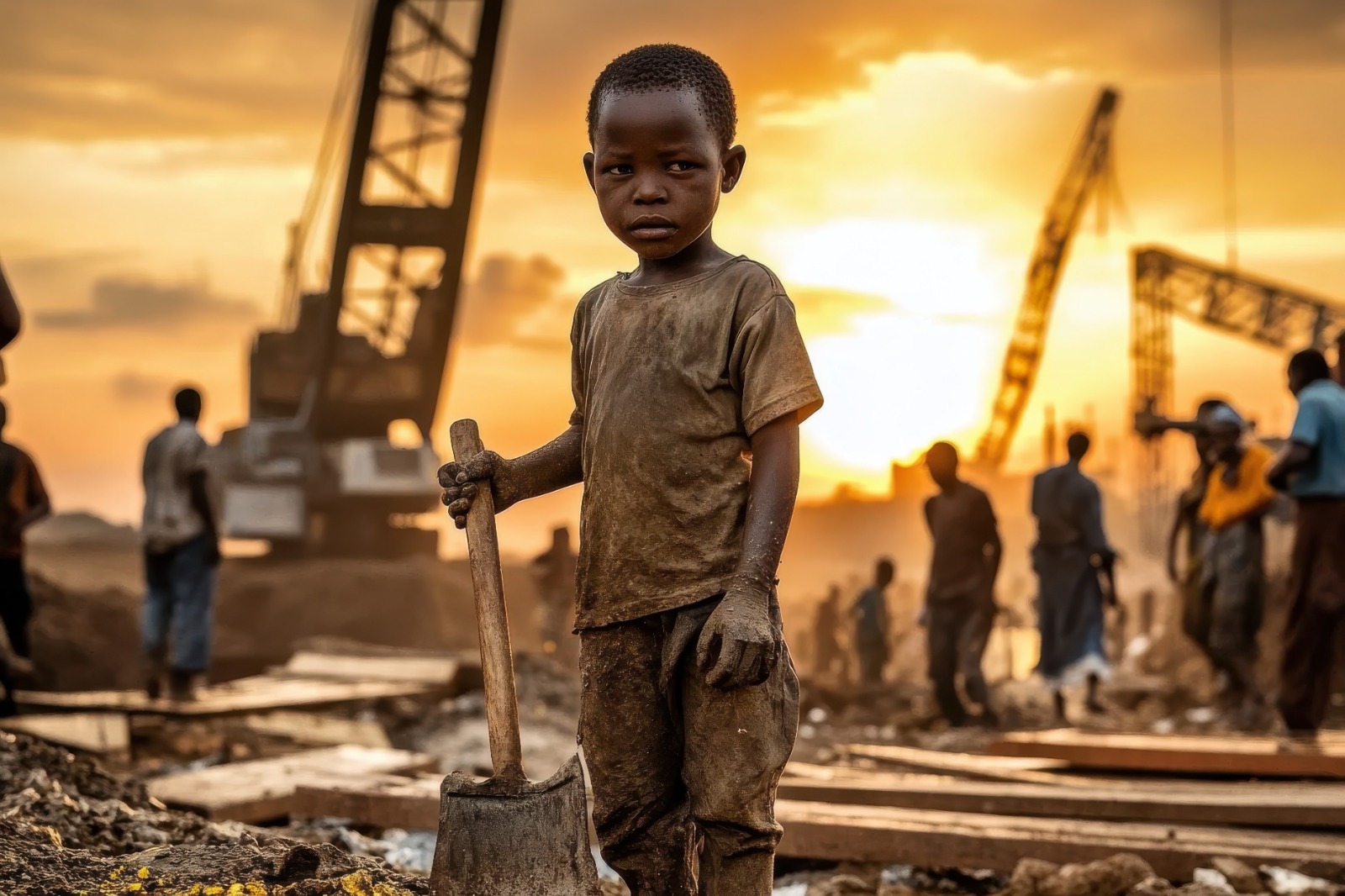
The Federal Ministry of Labour and Employment has raised concerns over the continued prevalence of child labour in Nigeria, saying between 15 million and 17 million children aged five to 17 were engaged in child labour, with 14.3 million involved in hazardous work.
Mrs Olaolu Olaitan, Director, Inspectorate, Department of the ministry and Chairman of the National Steering Committee for the Elimination of Child Labour, disclosed this on Tuesday in Ikeja at a stakeholders’ advocacy roundtable on child protection. She said domestic work was particularly dangerous because it happened behind closed doors, making it difficult to monitor children’s conditions and exposing them to abuse, exploitation and denial of basic rights.
The event, organised by the Devatop Centre for Africa Development with support from The Freedom Fund and funding from the U.S. Department of State, had the theme: ‘Strengthening Child Protection Responses to Exploitative Child Domestic Work.’
Speaking at the event, Olaitan said 14.3 million children involved in hazardous work represented 22.9 per cent of children aged five to 17.
She added that about 617,000 people were engaged in forced labour, while most child labourers were found in agriculture. Mining, domestic service and informal urban jobs, she said, were other high-risk areas.
Olaitan described domestic service as particularly dangerous because of its hidden nature.
“Domestic work is hidden. It happens behind closed doors, making it difficult to monitor or assess the condition of the child,” she said.
According to her, many children involved in domestic work were denied education, proper nutrition and freedom of movement.
She added that some were assigned hazardous tasks and exposed to sexual, physical and psychological abuse, exploitation and isolation.
“In many homes, you can easily identify the child domestic worker. They wear hand-me-down clothes, eat leftovers and are excluded from normal family activities,” she said.
Olaitan identified weak enforcement of laws, poor data availability and inadequate coordination among agencies as major challenges.
She said fragmentation among labour inspections, education systems and social protection programmes also affected implementation.
The director, however, said efforts were ongoing to improve coordination, including the launch of a child labour website and mobile application.
According to her, the platforms were designed to strengthen monitoring and improve responses to child labour cases.
Olaitan identified poverty as the primary driver of child labour, saying many families were forced to depend on children for income.
She also highlighted what she described as “poverty of mindset”, where harmful practices were normalised within communities.
“Some parents say they worked as children and nothing happened, but they fail to realise that the world has changed and the risks are much higher today,” she said.
The director called for stronger law enforcement, improved access to quality education, expanded social protection and responsible business practices.
She also urged private companies to adopt child-labour-free certification and due diligence practices.
Olaitan said eliminating child labour required collective responsibility and that no state should become complacent.
She noted that Lagos had the lowest prevalence of child labour but said its large population meant affected children could still be numerous.
“Even one child in child labour is one child too many. No state should fold its arms until every single child is free,” she said.
She said government targets included reducing child labour prevalence to below 25 per cent and hazardous labour to below 10 per cent by 2030.
Olaitan added that efforts were ongoing to raise school attendance above 90 per cent in high-burden areas.
She said the government also aimed to ensure that all states implemented child labour action plans.
Olaitan said the ministry conducted routine labour inspections and planned to expand coverage to hard-to-reach areas.
She outlined key intervention pillars as social protection, quality education, youth employment, stronger legal frameworks and behavioural change.
Olaitan stressed the need for inclusive and safe education, noting that insecurity had discouraged some parents from sending their children to school.
“Some parents keep their children at home due to fear, which further increases their vulnerability to child labour,” she said.
The director also emphasised the importance of decent work for adults, saying unemployment often pushed families to depend on children.
She called for improved coordination among agencies, better data management and stronger partnerships with the National Orientation Agency.
Olaitan also urged greater involvement of traditional institutions and community leaders in efforts to eliminate child labour.
She raised concerns about hidden costs in public education, saying such expenses could create barriers for families.
“Education is said to be free, but when children are asked to bring money for various items, it becomes a barrier. If it is free, it should truly be free,” she added.
Olaitan advocated skills acquisition and vocational training, noting that the ministry operated more than 160 training centres.
She said the centres offered free training and starter packs to beneficiaries.
“There is need for agricultural mechanisation to reduce reliance on child labour.
“It is often poor employers that engage children. With proper tools and resources, adults can be employed instead,” she said.
She urged stricter enforcement through increased inspections, stronger prosecution and stiffer penalties under the proposed Labour Standards Bill.
Olaitan also called for a whole-of-government and whole-of-society approach involving workers’ unions, employers, civil society and regional bodies such as ECOWAS.
She warned that some child labour cases began with seemingly good intentions, including taking children from poorer relatives into households.
According to her, such arrangements could sometimes lead to exploitation and abuse.
Olaitan said eliminating child labour would require sustained investment in poverty reduction, education, enforcement, data and behavioural change.
“The protection of our children from child labour is a collective responsibility. Everyone has a role to play,” she said.
Earlier, Miss Janet Homo, Project Lead, Devatop Centre for Africa Development, said improved government-CSO coordination had strengthened responses at grassroots level.
Homo said the government was willing to work with civil society organisations to improve responses to child protection cases in communities.
She, however, stressed that effective enforcement of existing laws remained critical.
“If the laws are properly enforced, eliminating child labour will become achievable,” she said.