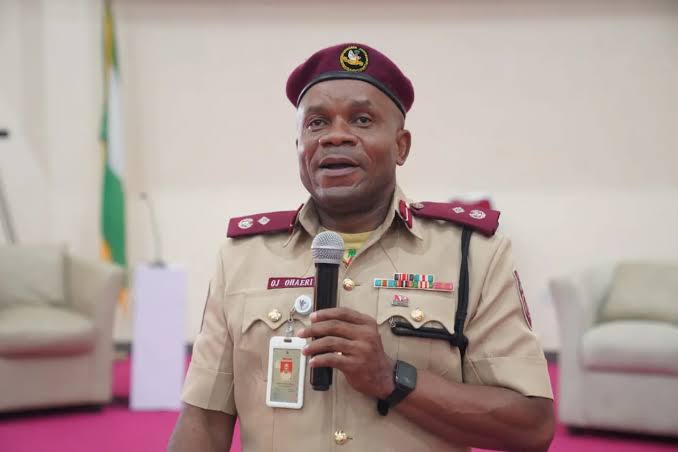
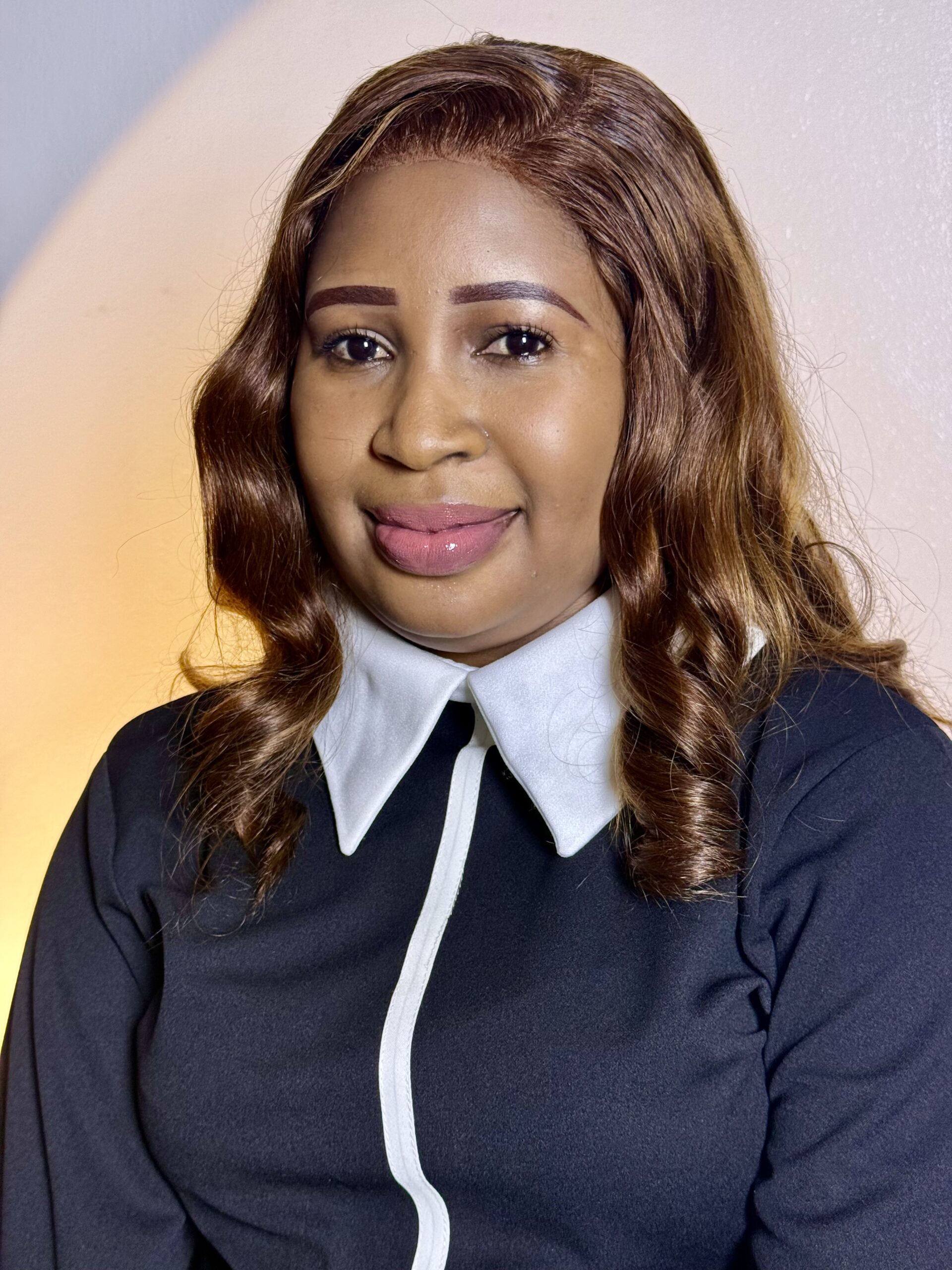
Elizabeth Onifade believes the future of HR lies far beyond recruitment, payroll and policy administration. For her, the profession’s real mandate is to build organisational capability—ensuring businesses have the talent, leadership and workplace culture required to achieve sustainable growth while enabling people to thrive.
As HR Business Partner for Commercial and Supply Chain at Crown Flour Mill Limited (Olam Agri), Onifade has spent nearly a decade helping to align people strategy with business priorities. Her expertise spans organisational development, talent management, leadership development, HR analytics, employee relations and change management, with a particular focus on building workforce capability that delivers measurable business results.
A certified SPHRi, AITD and ACIPM professional, Onifade holds an MBA in Human Resource Management and is pursuing a Doctor of Business Administration (DBA) at Rome Business School. Beyond her corporate role, she is a facilitator and mentor in one of Nigeria’s largest HR communities, supporting more than 3,000 HR professionals in their career development.
In this interview with The HR Anchor, she discusses why HR must become a strategic business partner, how organisations can balance commercial success with employee wellbeing, why technology should enhance—not replace—the human side of work, and the capabilities HR leaders will need to remain relevant in an AI-driven future.
Many people still see HR as the department that recruits staff, handles payroll, and resolves workplace disputes. In today’s workplace, what do you believe is the real purpose of HR?
Those things are real, but they’re the plumbing, not the purpose. The real work of HR is to make sure an organization can actually deliver its strategy through its people—and that people can grow through the work they do. I’ve seen employees address HR as “Admin,” whereas administration is just one of the things we do.
I think of HR as the function responsible for organizational capability: Do we have the right people in the right roles, with the right skills, working in conditions where they can do their best work? Recruitment and payroll are inputs into that.
We provide strategic support in role design, develop leaders, ensure our people are fairly treated when things go wrong, and have our people’s back. When HR is done well, it shapes the environment in which performance happens, not just processing what happens after. That shift—from administering people to enabling them—is really the whole story of where the profession is going.
HR is often expected to support employees while also helping organisations achieve business goals. How can HR balance advocating for people without losing sight of business performance?
I would gently push back on the idea that it’s a balancing act, because framing it that way assumes the two are in tension. Over a short enough horizon they can be. Over any meaningful horizon, they’re the same conversation. A business doesn’t perform sustainably on the back of exhausted, disengaged people, and advocacy that ignores commercial reality quickly loses its seat at the table.
The way you hold both is by earning credibility on the business side first. When I sit with my business leaders, I come with an understanding of their targets, their pressures, and their numbers—and then the people’s conversation lands very differently. “This is the right thing for our people” is a weak argument on its own; “this protects the capability we need to hit our targets next year” is a much stronger one, and often it’s the same recommendation.
So my job isn’t to referee between people and performance. It’s to keep showing leaders that the healthiest version of the business is also the most humane one, and to bring the evidence that proves it. We must know that “the health of the business is a reflection of the health of the people.”
As workplaces become more digital with AI, automation, hybrid work and remote teams, what aspects of HR should never change, regardless of how technology evolves?
Technology keeps changing the how. It should never touch the why. The things I’d protect are the deeply human ones: fairness, dignity, trust, confidentiality, and sound judgement.
AI can screen a thousand CVs, but it can’t sit with someone who has just lost a parent or a spouse, read the room in a difficult restructuring conversation, or decide what’s right when the policy and the human reality don’t line up neatly. That judgement—knowing when to follow the rule and when the situation calls for something more—is the core of the profession, and no tool replaces it.
We once hired a salesman whose CV didn’t look good, but he had the right experience. That guy happens to be one of our best salespeople. In fact, he hit a sales target that I’ve not seen since I assumed my role.
The same goes for how we treat people when they’re at their most vulnerable: during exits, grievances, and performance issues. If we ever automated away humanity in those moments, we would have optimised ourselves into irrelevance. Use the technology to remove the drudgery so we have more time for the human parts, not less.
Today’s workforce includes employees from different generations, each with different expectations about work, leadership, and career growth. How should organisations rethink their people’s practices to build workplaces where everyone can thrive?
The starting point is to stop designing for an “average” employee who doesn’t exist. Our workplaces were largely built around one-size-fits-all assumptions, and a five-generation workforce simply breaks that model.
Practically, it means building flexibility into the system rather than treating every accommodation as an exception—in how people work, how they’re rewarded, and how they grow. It means defining career progression around skills and impact rather than tenure, which matters enormously to our Gen Z and Millennials but shouldn’t disadvantage experienced ones. It also means resisting lazy generational stereotypes; the real differences are usually about life stage and individual preference, not birth year.
My favourite strategy here is reverse mentoring—pairing senior leaders with younger colleagues so learning flows both ways. I am also learning so much from the Gen Zs in my office, and they are learning from me.
But honestly, the biggest unlock is simple and unglamorous: ask people what they need instead of assuming. Most organisations design people’s practices in a room with no employees in it. Thriving workplaces are co-created.
Many organisations invest heavily in technology, but employee engagement and retention remain major challenges. In your view, what are some of the biggest mistakes organisations make when trying to build high-performing workplaces?
The first mistake is confusing tools and perks with culture. You can buy the best engagement platform on the market and still have a toxic environment because culture is made of behaviours and leadership, not software. Technology amplifies the culture you already have; it doesn’t fix a broken one.
The second is neglecting the middle. Organisations pour attention into senior leadership and flashy initiatives, but remember, people don’t leave companies—they leave managers. If your frontline and middle managers aren’t equipped to lead people well, no strategy above them will hold.
The third is measuring without acting: running the engagement survey, presenting the deck, and changing nothing. That does more damage than not asking at all because you’ve now signalled that feedback goes into a void.
The fourth is assuming retention is purely about pay. Pay gets people in the door and stops them leaving for the wrong reasons, but what keeps good people is growth, respect, meaningful work, and a manager who has their back. Get these wrong, and no salary will fix it for long.
If you had the opportunity to redesign the HR function for the next decade, what would you keep, what would you change, and what new capabilities would every HR team need to remain relevant?
I would keep the human core without apology—the ethics, the advocacy, the coaching instinct, and the willingness to be the conscience of the organisation when needed. That’s not old-fashioned; it’s our moat.
I would change the operating model. Too much of HR is still built around annual cycles and process ownership—the annual review, the yearly engagement survey, HR “owning” people’s decisions. I’d move to something more continuous and more distributed: managers owning their people, with HR enabling and coaching them rather than gatekeeping. Less administration, more architecture.
The new capabilities every team will need are, first, data fluency—being able to read the workforce like a business reads its finances and make people decisions with evidence. Data is the new oil.
Second, genuine digital and AI literacy, so we shape how these tools enter the workplace instead of being shaped by them.
Third, real business acumen. The days of HR sitting outside the commercial conversation are over.
And fourth, change leadership—because the one certainty of the next decade is constant change, and someone has to help people move through it with their trust and dignity intact. That, to me, is the HR team worth building.