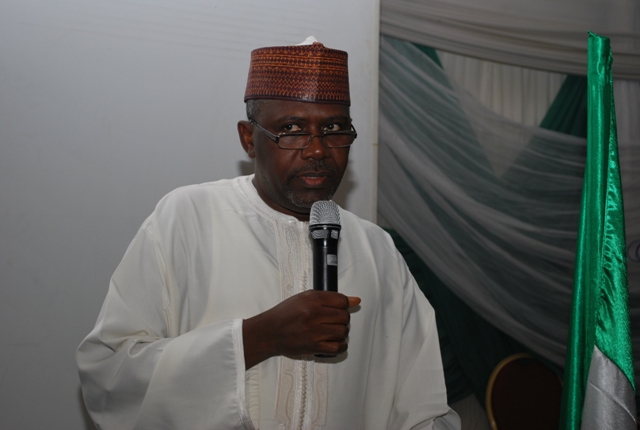
A former Head of the Civil Service of the Federation (HoCSF), Alhaji Bukar Goni, has said the Federal Government was prepared to approve a ₦150,000 national minimum wage but was constrained by opposition from state governments, local governments, and private sector employers over concerns about affordability.
Goni, who chaired the National Minimum Wage Negotiations Committee, made the disclosure while delivering remarks at the 2026 United Nations Public Service Day Lecture in Abuja.
He explained that negotiations reached a stalemate for several days because of disagreements over the capacity of employers to implement the proposed wage.
“The Federal Government was willing to pay ₦150,000 as minimum wage for workers, but the states and local governments said they could not afford it,” Goni said.
According to him, representatives of the organised private sector also argued that rising fuel and electricity costs would make it difficult for businesses to sustain the proposed wage increase without reducing their workforce.
Goni warned that widespread downsizing would further exacerbate Nigeria’s unemployment challenges.
“And for us at the federal level, downsizing would compound Nigeria’s problems. Nobody wants to hear that somebody has been asked to go home from his workplace because the Federal Government increased the minimum wage,” he said.
To prevent similar deadlocks in future wage negotiations, Goni called for an amendment to the 1999 Constitution, arguing that the current constitutional framework does not adequately reflect the differing fiscal capacities of employers across the country.
“So, unless the 1999 Constitution is amended, Nigeria may not be able to address the minimum wage issue holistically.
“The amendment will allow for ‘pay as you can afford’ across all sectors,” Goni said.
He argued that removing the national minimum wage from the Concurrent Legislative List would allow state governments and private sector employers to determine wage levels based on their respective financial capacities, while providing a more sustainable framework for employment and labour relations.