Millions of livelihoods are at risk as compounding global shocks expose deep structural weaknesses in labour markets, the International Labour Organization (ILO) has warned.
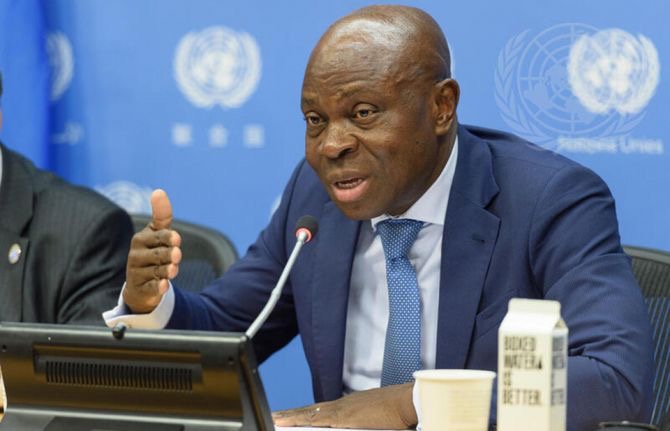
Speaking at the IMF and World Bank Spring Meetings in Washington, D.C., the ILO Director-General, Gilbert Houngbo, said that although headline unemployment figures appear stable into early 2026, underlying conditions remain markedly fragile.
Houngbo identified rising sovereign debt, constrained fiscal space, and heightened economic uncertainty as key factors limiting governments’ capacity to support employment and strengthen labour market institutions.
“The deeper challenge is one of work quality and structural transformation. Some 284 million workers continue to live in extreme poverty, while 2.1 billion workers—nearly 58 per cent of the global workforce – remain in informal employment,” he said.
He cautioned that deficits in decent work are eroding social cohesion and weakening economic resilience worldwide.
Houngbo further highlighted the Middle East conflict as a significant amplifier of existing risks, noting that its effects are reverberating across energy markets, trade routes, and global supply chains.
“The Middle East conflict is not an isolated shock superimposed on an otherwise stable global economy. It is compounding pre-existing vulnerabilities and increasing the likelihood of more severe and lasting effects on the world of work,” he said.
According to him, countries directly affected are grappling with destroyed infrastructure, business closures, displacement, and insecurity – factors that are simultaneously reducing employment and overwhelming labour institutions and public services.
Beyond the region, he noted, disruptions are already impacting wages and working conditions across multiple economies.
“Low-income households, informal workers, migrant workers, and small enterprises face the heaviest burdens, with rising risks of child labour, forced labour, and other severe decent work deficits.”
To prevent vulnerable households from sliding further into insecurity, Houngbo urged governments to accelerate the expansion of social protection systems and active labour market interventions.
“Effective social protection, support for livelihoods, and active labour market policy measures are essential to prevent vulnerable workers and households from sliding further into insecurity.”