
The Federal Workers Forum (FWF) has called on the Federal Government to settle outstanding workers’ entitlements, review salaries, and implement a new national minimum wage of ₦300,000, arguing that current earnings are no longer sufficient to sustain workers amid rising living costs.
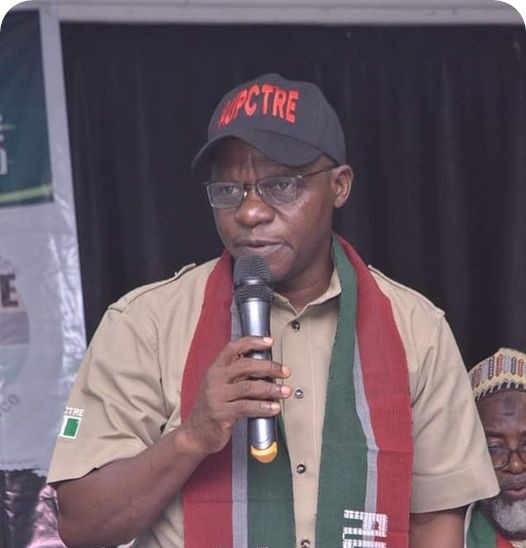
In a statement issued on Monday in Abuja, Andrew Emelieze, National Coordinator of the forum, urged the government to pay the outstanding two-month wage award owed to federal workers since June 2024, settle arrears of the 40 per cent peculiar allowance, and clear all outstanding arrears arising from the implementation of the ₦70,000 national minimum wage.
“We remind the Federal Government of its outstanding obligations to federal workers, including the two-month wage award, peculiar allowance arrears, and the full implementation of the ₦70,000 minimum wage,” Emelieze said.
He also called on President Bola Tinubu to review workers’ salaries, arguing that the current remuneration structure no longer reflects prevailing economic realities.
“We reiterate our recommendation for a minimum wage of ₦300,000 and a maximum wage of ₦1.5 million for officers on Grade Level 17. We await an immediate response from the President,” he said.
Beyond salary-related issues, the forum raised concerns about the welfare of correctional officers, alleging that many personnel are required to purchase official uniforms, boots, belts, rank badges, and other work equipment with their own funds.
Emelieze further alleged that officers sitting promotion examinations were compelled to contribute money towards the welfare of examiners, adding that similar practices reportedly exist within the Federal Fire Service.
“We call for an independent investigation into allegations of extortion during promotion exercises and demand improved welfare for correctional officers and other paramilitary personnel,” he said.
The forum also expressed concern over conditions in correctional centres across the country, describing them as overcrowded and poorly managed.
According to Emelieze, inadequate feeding, disease outbreaks, and the prolonged detention of awaiting-trial inmates pose significant health risks to inmates, correctional personnel, and surrounding communities.
“Our correctional centres have become places of torment instead of rehabilitation. No Nigerian should be subjected to such degrading and inhumane conditions,” he said.
The forum urged the government to decongest correctional facilities through a general amnesty and the exercise of the prerogative of mercy for inmates who have spent more than five years awaiting trial.
It also called on the authorities to ensure speedy trials so that no awaiting-trial inmate remains in custody for more than one year without the conclusion of their case.
“A prison sentence should not become a death sentence. The justice system must prioritise rehabilitation, speedy trials, and respect for human dignity,” Emelieze said.