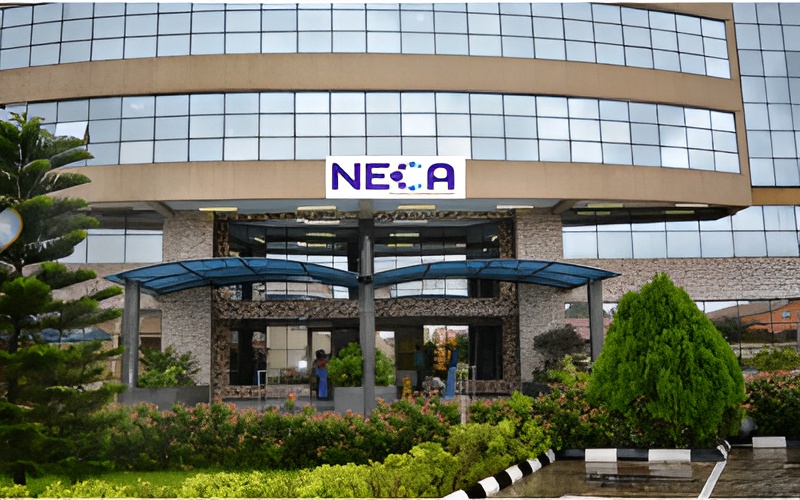
The Nigeria Employers’ Consultative Association (NECA) has called for early consultations among the government, employers, and organised labour ahead of negotiations for a new national minimum wage in 2027.
Geneva, Switzerland, NECA Director-General, Adewale-Smatt Oyerinde, said building consensus well in advance would enable stakeholders to agree on a wage structure that is fair, realistic, and sustainable for both workers and businesses.
Oyerinde said the review of the current minimum wage should be guided by Nigeria’s economic realities, workers’ welfare needs, enterprise sustainability, and productivity levels. He noted that an agreement anchored on these factors would help improve living standards while supporting economic growth and job creation.
Speaking with journalists on the sidelines of the conference, Oyerinde stressed that the review process must be approached with realism and evidence-based discussions.
“We must look at the issue from a realistic context. There are four critical pillars that must guide whatever we are going to do next year,” he said.
According to him, the first pillar is the overall state of the economy, followed by the needs of workers and their families, enterprise sustainability, and productivity.
He explained that these factors are closely interrelated and should serve as the foundation for determining a minimum wage that supports workers without imposing excessive pressure on businesses.
Oyerinde noted that a well-structured minimum wage benefits both employees and employers, as higher disposable incomes stimulate consumer spending and support business growth.
“It’s not only workers that the minimum wage will serve; it will also serve employers because when people have enough disposable income, they can patronise businesses,” he said.
“If businesses cannot sell, they cannot survive, and if businesses cannot survive, we cannot create jobs. It is a circle that requires balance.”
The NECA Director-General cautioned against proposing wage figures without adequate consultation and research, stressing that any new minimum wage should emerge through social dialogue among stakeholders rather than political pronouncements.
Reacting to recent suggestions of a ₦100,000 minimum wage, Oyerinde questioned the basis for such proposals and called for empirical evidence to support any figure under consideration.
“When they touted ₦100,000, what was the foundation? What is the parameter? Where is the research that shows that this is the figure we should be talking about?” he asked.
He reaffirmed employers’ commitment to the tripartite framework involving government, employers, and labour unions in determining national wage policies.
Oyerinde warned that excluding employers from wage negotiations could undermine the credibility of any agreement reached and weaken the principles of social dialogue.
“Anything that will erode tripartism and the foundation on which we are standing should be avoided,” he said.
“We are open to engage. The private sector is not in the right place, but we are in a good place to negotiate.”
According to him, NECA has already commenced preliminary discussions with organised labour to identify common ground and understand the priorities of all stakeholders before formal negotiations begin.
He added that sustainable wage growth would depend largely on addressing broader economic challenges, including inadequate electricity supply, rising energy costs, insecurity, and low industrial productivity.
“We need to deal with power, energy, and security challenges. If we don’t address those fundamentals, the outcome of our efforts will not really show,” he said.
Oyerinde further urged the government to sustain efforts aimed at tackling structural economic challenges, noting that many of the issues affecting businesses and workers have accumulated over several years.
He expressed optimism that continued collaboration between the government and the private sector would improve the operating environment and support economic recovery.
Oyerinde reiterated NECA’s commitment to constructive engagement with all stakeholders to ensure that the next national minimum wage is fair, sustainable, and economically realistic for Nigerian workers and employers alike.