
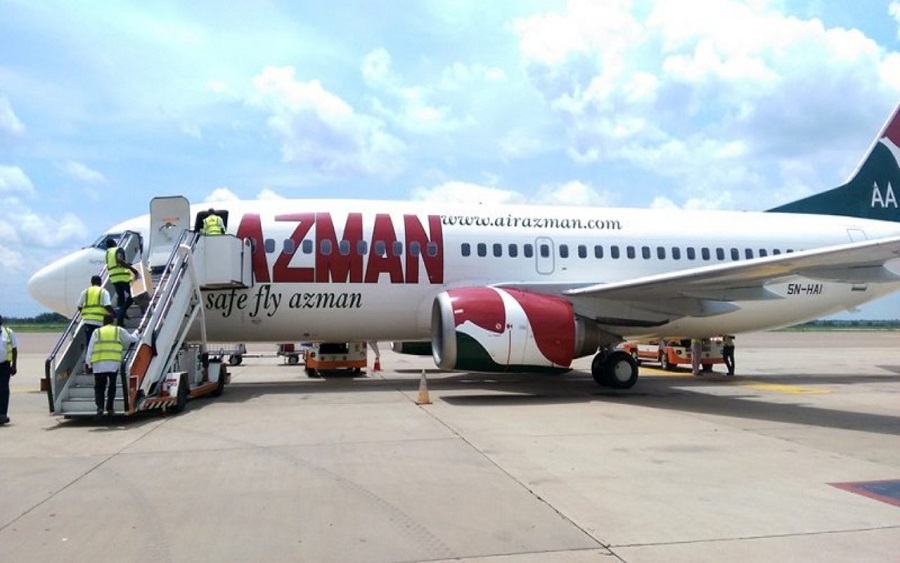
The National Industrial Court sitting in Kano has ordered Azman Air to pay its former Line Captain, Mr. Abubakar Abdulkarim 9 million in unpaid salaries, ₦2.4 million as the balance of one month’s salary in lieu of notice, and ₦5 million in damages after ruling that his employment was wrongfully terminated. Delivering judgment, the Presiding Judge of the Kano Judicial Division, Hon. Justice Mahmood Namtari, directed the airline to make the payments within 30 days.
Justice Namtari held that Azman Air failed to prove the reason it gave for terminating Mr. Abdulkarim’s employment. He said the airline did not provide credible evidence to justify the dismissal, making the termination wrongful under settled judicial authorities and the Termination of Employment Convention. The judge also ruled that the airline failed to comply with the termination clause in the employment contract by ending Mr. Abdulkarim’s appointment with immediate effect without making the required payment at the time of termination.
According to court documents, Mr. Abdulkarim told the court that he served the airline faithfully but was owed three months’ salaries in 2020. He also said the company paid only part of his salary in lieu of notice after terminating his employment.
The former pilot further claimed that Azman Air falsely portrayed him as having been dismissed for indiscipline and promoting anarchy through media publications. He argued that the reports damaged his professional reputation and accused the airline of blacklisting him within the aviation industry by discouraging other airlines from employing him while advertising vacancies for pilots shortly after his disengagement.
In its defence, Azman Air admitted employing Mr. Abdulkarim as a Line Captain but argued that the COVID-19 pandemic forced it to review the salaries of all pilots, leading to a reduction in his pay. The airline maintained that it lawfully terminated his employment by paying one month’s salary in lieu of notice based on the revised salary structure.
The airline also denied owing Mr. Abdulkarim any outstanding salaries or authorising any defamatory publication against him. It said the newspaper reports relied on by the claimant were not issued by the company, denied blacklisting him, and maintained that recruiting new pilots after Mr. Abdulkarim’s disengagement was a routine operational decision unrelated to his termination.
Counsel for Azman Air argued that the employment relationship was governed by the contract of employment and submitted that once one month’s salary in lieu of notice had been paid, the termination could not be declared wrongful if it complied with the agreed terms. The defence therefore urged the court to dismiss the suit.
However, delivering judgment after reviewing the evidence and arguments from both parties, Justice Namtari held that the reason stated in Mr. Abdulkarim’s termination letter was not supported by credible evidence. He noted that although Azman Air relied on internal memoranda referring to the impact of the COVID-19 pandemic, the airline failed to produce evidence showing the developments within the company that made the termination necessary.
The judge also said the airline’s advertisement for new pilots shortly after Mr. Abdulkarim’s disengagement contradicted its claim that economic challenges required a reduction in the number of pilots.
Justice Namtari further held that the internal memoranda reviewing pilots’ salaries could not alter the terms of Mr. Abdulkarim’s contract of employment. He said there was no evidence that the former pilot accepted the salary review and ruled that internal memos could not create or vary contractual obligations.
On the allegation of defamation, the court held that Mr. Abdulkarim failed to prove that the alleged defamatory publications were made by or with the authorisation of Azman Air. Justice Namtari noted that the airline denied authoring or approving the publications, while the publishers were neither joined in the suit nor called as witnesses. The court therefore dismissed the defamation claim.