
The Nigeria Medical Association (NMA) has called for the establishment of more medical schools in Akwa Ibom State, warning that the persistent shortage of healthcare professionals will continue to undermine recruitment and service delivery unless the state expands its capacity to train doctors and nurses locally.
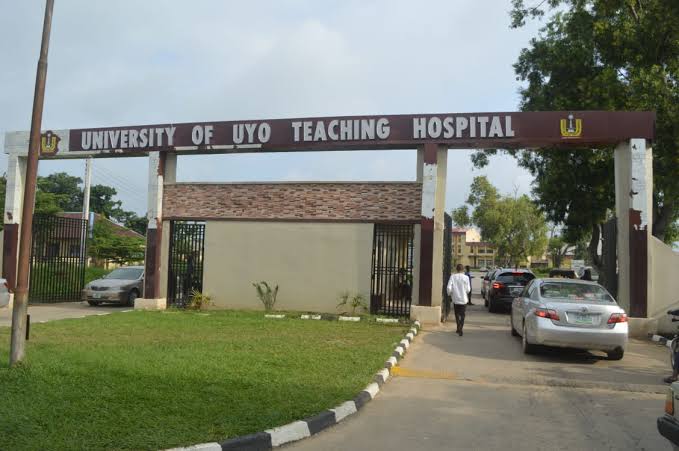
Speaking at the NMA Akwa Ibom Annual General Meeting and Scientific Conference in Uyo on Tuesday, the association’s state chairman, Prof. Aniekan Peter, said the shortage of healthcare workers had already begun to affect government recruitment efforts.
He cited a recent recruitment exercise in which approved positions for doctors could not be filled despite government approval.
“If there is vacancies for 100,000 teachers in the state, I’m sure you will find them immediately, but recently the State governor, Umo Eno approved employment for 400 doctors and we couldn’t get them. It means that there’s something wrong somewhere.”
Prof. Peter said a similar challenge was experienced during the recruitment of nurses.
“We were looking for 700 nurses in the first time and we couldn’t get until we relax some of the criteria before we were able to get the number. So it’s time as a people to begin to refocus and that’s why our AGM is all about: Refocusing our attention for the future of health care for Akwa Ibom,” he said.
According to the NMA chairman, the underlying problem is the state’s limited capacity to train healthcare professionals. While commending the approval granted for Akwa Ibom State University to commence medical and related programmes, he argued that a single medical school is insufficient for a state of Akwa Ibom’s size.
“We appreciate the governor for the approval granted to the Akwa Ibom State University to start doing medicine and other medical courses. But for Akwa Ibom State that is one over four, it’s still a failure, just 25%. So we thank the governor for opening the first medical school in the state; other states like Delta already had four,” he said.
Prof. Peter urged the state government to pursue a deliberate expansion of medical education, describing it as a strategic investment in development.
“Medicine is no more a course, it’s an empowerment and any state or country that doesn’t recognize this will not get it right. If Akwa Ibom wants to be one of the states to be reckoned with, we must see medical education as an empowerment; we must have at least seven medical schools in this state.”
He added that existing health facilities could be upgraded to support medical education.
“We have our general hospital at Ikot Ekpene that can be a focus of a university, we have our general hospital at Eket that can be another focus of another university. We can even train them in different medical centres; we have the Ibom Specialist Hospital that can stand alone as a university,” he said.
The association maintained that expanding local training opportunities for healthcare professionals remains the most sustainable solution to the persistent vacancies across hospitals in the state.