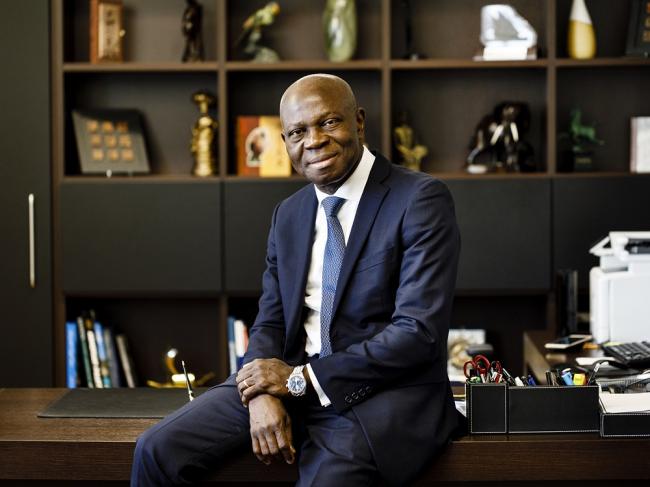
The International Labour Organisation (ILO) has re-elected Gilbert Houngbo as its Director-General for a second five-year term, extending his leadership of the global labour body until 2032. Houngbo secured 51 votes, with five abstentions, in a secret ballot conducted by the ILO Governing Body during its 358th Session in Geneva, Switzerland, on Nov. 16, 2026.
His re-election means he will continue leading the organisation from Oct. 1, 2027, to Sept. 30, 2032, overseeing its work on international labour standards, workers’ rights, decent work and social justice. Houngbo, who took office in October 2022, is the first African to serve as ILO Director-General and will now begin a second term in the position.
According to a statement published on the organisation’s website on Monday, Houngbo is the 11th Director-General of the ILO.
During his first term, the organisation strengthened international labour standards and launched the Global Coalition for Social Justice to advance decent work and equality.
The ILO also introduced institutional reforms to improve operational efficiency while increasing efforts to address emerging workplace challenges, particularly those associated with digital technologies.
Outlining his priorities for the next five years, Houngbo pledged to strengthen the organisation’s standard-setting and supervisory functions, expand its presence in member countries and address the impact of artificial intelligence on employment.
He also promised further reforms to improve operational efficiency and secure the organisation’s long-term financial sustainability amid changing global economic conditions.
Speaking after his re-election, Houngbo reaffirmed the ILO’s commitment to promoting social justice as the foundation for lasting peace across the world.
“More than a century after its founding, our organisation remains committed to a mission that is more relevant than ever: promoting social justice as the foundation of universal and lasting peace,” he said.
He identified tripartism as the organisation’s greatest strength, stressing the importance of dialogue, mutual respect and collective responsibility in a world facing growing tensions, conflicts and uncertainty.
“Our most precious strength remains tripartism. In a world marked by tensions, conflicts and uncertainty, the ILO embodies a simple but essential conviction: dialogue remains possible,” he said.
Houngbo added that governments, employers and workers could achieve mutual respect and pursue common interests through continued engagement, despite their differences.
“Tripartism does not require us to think alike. It requires us to build together despite our differences,” he said.
He further stressed that achieving this required active listening, responsible action and a willingness by all parties to reach compromises in the collective interest.
Two other candidates, Yolanda Díaz-Pérez of Spain and Javier González-Olaechea Franco of Peru, withdrew their candidacies before the election.
As part of the selection process, candidates presented their visions for the organisation during a public interactive session on Sept. 23, where they engaged with representatives of the ILO’s tripartite constituents.
The Governing Body subsequently held private hearings with the candidates on Nov. 9 before conducting the election on Nov. 16 through a secret ballot.
Founded in 1919, the ILO is the oldest specialised agency of the United Nations. It brings together governments, employers and workers from 187 member states to promote social justice and decent work for all.