
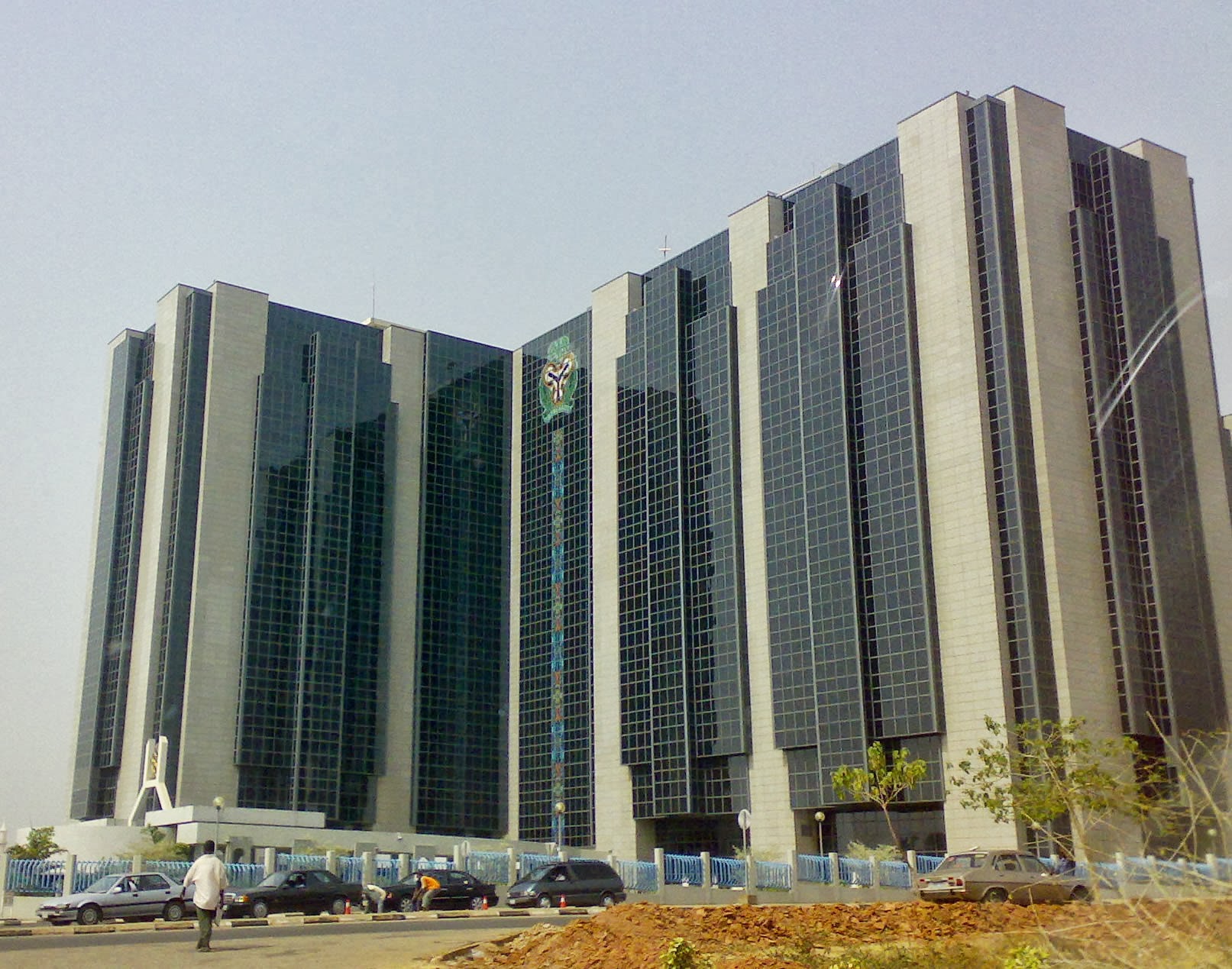
Sixty-two former employees of the Central Bank of Nigeria (CBN) have urged the National Industrial Court of Nigeria (NICN) in Abuja to dismiss an application by the apex bank seeking to alter the procedure of their lawsuit over their alleged unlawful termination.
The ex-workers argued that the bank’s request was premature and would unnecessarily delay the determination of the case, in which they are seeking the nullification of their dismissal and an order for their reinstatement.
The matter came up on Monday before Justice Osatohanmwen Obaseki-Osaghae, following an application by the CBN, through its counsel, Mr. Wilson Inam, SAN, asking the court to convert the originating summons filed by the claimants into a writ of summons. The bank contended that the suit involved disputed facts which required oral evidence.
Arguing the application, Mr. Inam told the court that the former employees had raised substantial factual issues that could not be resolved on affidavit evidence alone. He added that the claimants were served with the motion dated November 26 but failed to file a counter-affidavit in response.
“The facts are not contested. These are facts in which judgment can’t be given to the claimants without oral evidence,” Mr. Inam said, arguing that the claimants’ failure to respond amounted to an admission of the facts contained in the application.
However, counsel to the former workers, Mr. Ola Olanipekun, SAN, urged the court to dismiss the application, stating that he intended to oppose it purely on points of law. He explained that although no counter-affidavit was filed, the rules of the court permitted him to challenge the motion legally.
Citing Order 17, Rule 12 of the NICN Rules, Mr. Olanipekun argued that the CBN’s application could not be granted because the bank itself had not filed a counter-affidavit to the substantive suit.
“My learned brother has not filed a counter-affidavit to our process served on them,” he said, adding that the claimants still retained the right to file further affidavits once the bank responded appropriately.
He maintained that, in the absence of a counter-affidavit from the CBN, “it is only the pleading of the claimants that is before my lord.” He described the bank’s application as premature and urged the court to discountenance it.
Mr. Olanipekun also relied on previous judicial decisions, including Famfa Oil vs. AGF (2003) and National Bank of Nigeria vs. Alakija (1978), to argue that issues raised in affidavits could be resolved by the court without converting the originating process. He contended that a “proposed counter-affidavit” attached to the bank’s application could not be treated as a valid process.
Responding to a question from Justice Obaseki-Osaghae on whether the court could rely on the proposed counter-affidavit, Mr. Olanipekun said, “A proposed process is not a process before the court because a party can change his mind.” He added that pleadings must be completed before the court could properly determine whether the matter required oral evidence.
After hearing arguments from both sides, Justice Obaseki-Osaghae adjourned the matter and fixed February 10 for ruling on the CBN’s application.
The 62 former employees filed separate suits against the CBN as the sole defendant. In one of the suits, marked NICN/ABJ/26x/2024, dated August 21, 2024, and filed on August 22, 2024, the claimants asked the court to nullify their termination letters.
They are challenging a letter titled “Re-ORGANISATION,” dated May 23, 2024, and effective from May 24, 2024, issued by the CBN’s Director of Human Resources. According to the claimants, the letter violated the provisions of the CBN Act 2007 and the bank’s human resource policies, rendering the action arbitrary, unlawful, null, and void.
The former staff members are seeking a declaration that their employment with the CBN remains valid and subsisting. They are also asking the court to set aside the termination letters and order their reinstatement to their former positions or to higher positions they would ordinarily have attained. In addition, they want the bank to pay all outstanding salaries, allowances, and other entitlements they would have earned had their employment not been terminated.
The court had earlier, on November 27, 2025, fined the CBN ₦620,000 for stalling the hearing of the case. Counsel to both parties confirmed on Monday that the fine had been paid.
The claimants further alleged that their termination between February and May 2024 was carried out without due process, in violation of the CBN Act and international labour standards. They also claimed that public backlash over the dismissals later compelled the bank to introduce an early exit programme in late 2024, allowing other staff to leave voluntarily.
Some of the affected workers were said to be members of the defunct Economic Intelligence Unit (EIU) of the CBN.