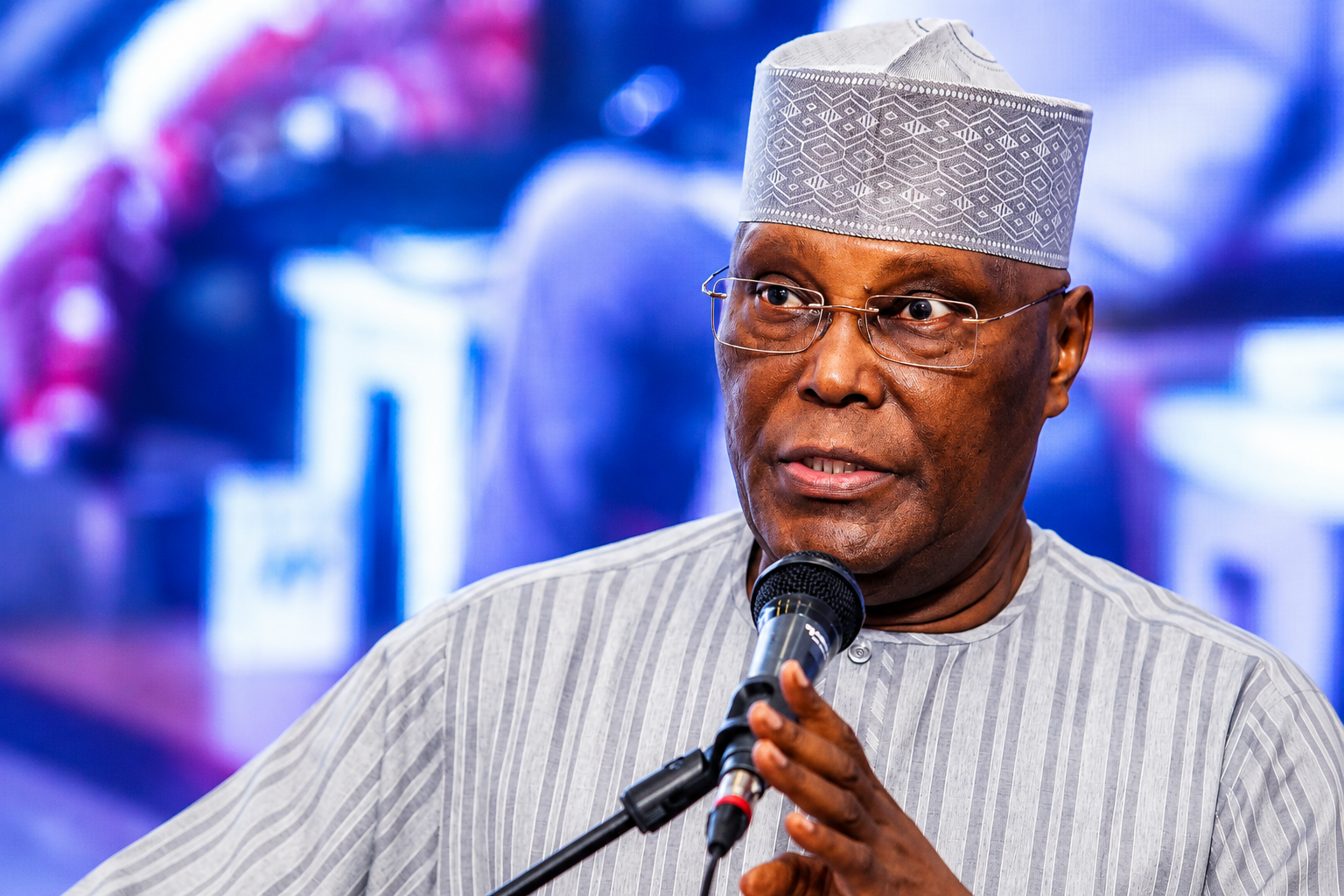
Former Vice President Atiku Abubakar has thrown his weight behind organised labour in the push for a new living wage, saying the current ₦70,000 minimum wage has been wiped out by inflation under President Bola Tinubu.
Atiku, who is the presidential candidate of the African Democratic Congress, ADC, said Nigerian workers are facing the worst cost-of-living crisis in years despite earning more on paper.
In a statement on Sunday by his campaign spokesman, Phrank Shaibu, the ADC flagbearer accused the Tinubu administration of removing petrol subsidy without any real safety net for workers.
He said the government removed the support system holding up low-income earners and left them exposed.
“The government pulled away the floor, offered workers a flimsy umbrella and now applauds itself while the rain beats down on them,” Atiku said.
The former Vice President said while the minimum wage was raised from ₦30,000 to ₦70,000, the value has collapsed because prices of fuel, food, transport and housing have tripled.
He used petrol prices to show how far the wage has fallen.
According to him, at the current pump price of about ₦1,400 per litre, the full ₦70,000 salary can only buy 50 litres of fuel.
He then asked, “At ₦1,400 a litre, the entire ₦70,000 monthly minimum wage buys just 50 litres of petrol. What does the worker take home to feed the children? What pays the rent? What gets that worker back to work on Monday?”
Atiku contrasted this with 2023, when petrol sold for an average of ₦254.06 per litre in April, meaning a ₦30,000 wage could buy about 118 litres.
He said, “The payslip has grown, but the fuel it can buy has more than halved. Tinubu has given workers a larger number and left them with a smaller life. That is hardship dressed up as a wage increase.”
The ADC presidential hopeful also argued that Nigeria lags behind other oil-producing African nations in wage value. He listed Libya, Algeria, Equatorial Guinea and Gabon, saying their minimum wages translate to roughly ₦213,000, ₦245,000, ₦302,000 and ₦351,000 respectively as of July 24, 2026.
He admitted that wage systems vary by country but insisted the comparison shows ₦70,000 is not a living wage in today’s Nigeria.
“The Nigerian worker is the engine of this country’s productive life, yet Tinubu expects that engine to run without fuel,” he said.
Atiku stressed that fuel price hikes do not end at petrol stations but affect every part of daily life.
“Petrol does not stay at the pump. Its price follows the farmer to market, enters the baker’s oven and appears in the fare a parent pays to take a child to school,” he said.
He therefore called on President Tinubu to approve a significant wage increase that matches current realities of food, transport, rent and electricity costs, and to be transparent with labour about its plans.
“If he has no intention of raising workers’ pay, he should say so plainly and stop stringing the Nigeria Labour Congress and other labour leaders along,” Atiku added.
Outlining what he would do if elected, Atiku said he would immediately begin moves to raise the minimum wage and introduce a capped, transparent and independently audited production subsidy for locally refined petroleum products meant for domestic consumption.
He said government performance should not be measured by federation account allocations but by whether families can afford to live.
“Nigerians do not eat FAAC figures. A full treasury is no answer to an empty kitchen. The test of this government is whether the men and women who work all month can live on what they earn,” he said.
He concluded, “A living wage must buy a living. It is not a privilege; it is a basic right. Tinubu has made life painfully expensive. I will make life affordable again.”