The Federal Ministry of Labour and Employment (FMLE) has called for stronger enforcement of child labour laws, enhanced support for vulnerable families, and closer collaboration among government, employers, civil society organisations, and local communities to eliminate child labour in Nigeria.
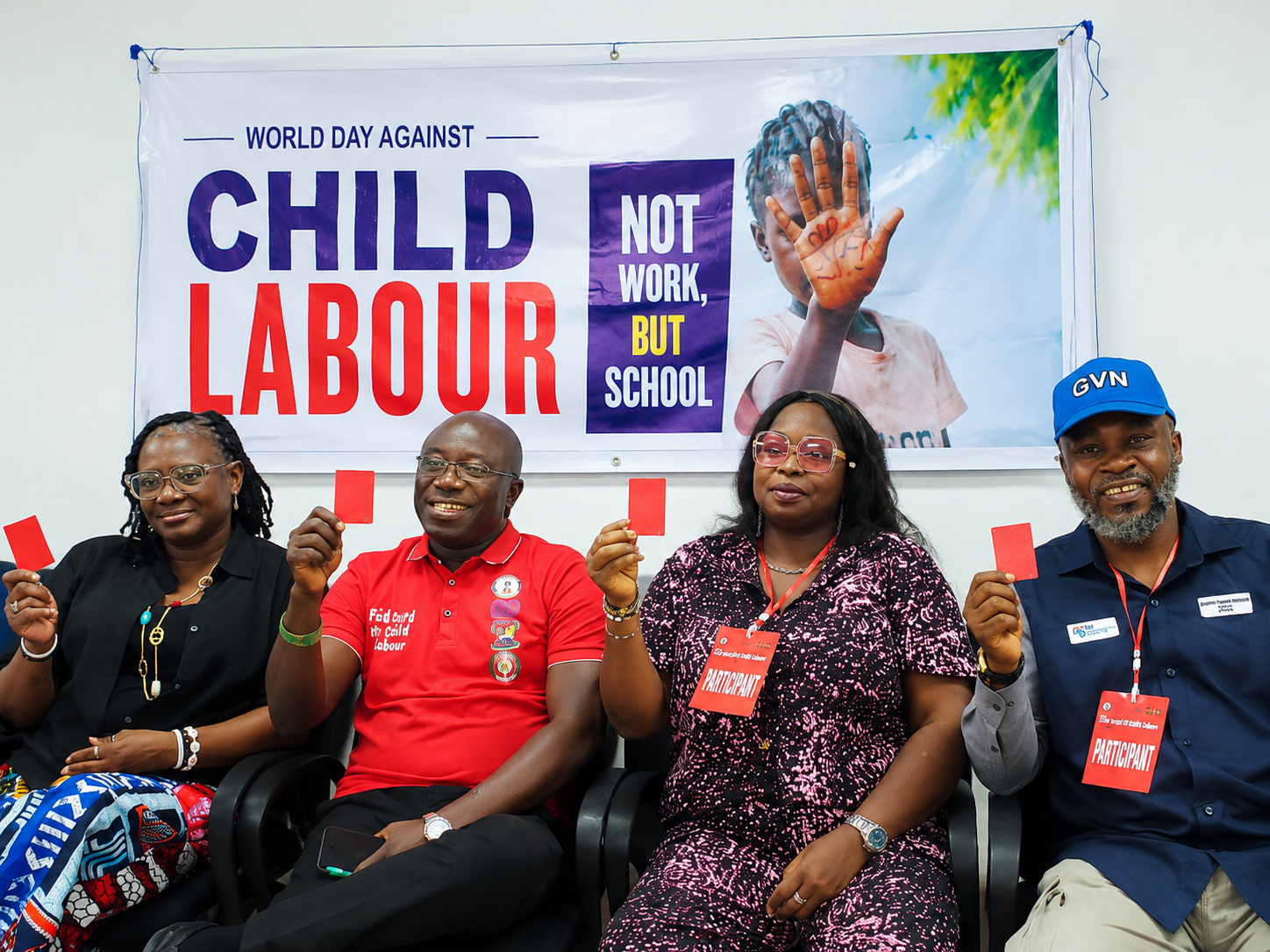
The call was made on Wednesday, 1 July 2026, during a Child Labour Symposium organised by the ministry at its Ikoyi office in Lagos to commemorate the World Day Against Child Labour. The symposium, themed “Red Card to Child Labour: Fair Play for Children, Decent Work for Adults,” brought together labour officials, employers, development partners, civil society organisations, educators, and community leaders to identify practical strategies for addressing child labour across the country.
Delivering the welcome address, the Federal Controller of Labour for Lagos State, E.A. Itemoagbo, said child labour remains a stark reality in many communities, where children can be seen hawking on busy roads, working in mechanical workshops, and serving as domestic workers instead of attending school.
Itemoagbo attributed the persistent challenge to rising living costs, unemployment, and widespread economic hardship, noting that many families are forced into survival mode, leaving children vulnerable to exploitation.
He stressed that expanding access to decent work, fair wages, and social protection for adults is critical to reducing child labour. He urged governments, employers, labour unions, civil society organisations, educators, and community leaders to strengthen child protection systems, advocate for vulnerable children, and enforce child labour laws more effectively.
Delivering the keynote address, titled “The Role of Government, Employers and Communities in Combating Child Labour in Nigeria,” the Zonal Director, South-West Zone, and incoming Federal Controller of Labour for Lagos State, Mienye Badejo, said tackling child labour requires a data-driven approach supported by stronger enforcement and sustained collaboration.
Citing data from the National Bureau of Statistics (NBS) and the International Labour Organization (ILO), Badejo said that 39 per cent of Nigeria’s estimated 63 million children—approximately 24 million—are engaged in child labour, while 23 per cent, representing nearly 14 million children, are involved in hazardous work that threatens their health and safety.
She added that 35.3 per cent of children aged between five and 14 combine schooling with work, adversely affecting learning outcomes, contributing to poor academic performance, and increasing school dropout rates.
According to Badejo, child labour affects 44.8 per cent of children in rural communities, compared with 30 per cent in urban areas. She said the agricultural sector accounts for 57 per cent of child labour cases, followed by the services sector with 26 per cent, while the North-West geopolitical zone records the highest incidence nationwide.
She urged the government to move beyond policy formulation to effective implementation through technology-driven enforcement, stronger partnerships, improved support for vulnerable families, and sustained public awareness campaigns.
“We cannot build a prosperous and competitive nation with 24 million children trapped in child labour,” she said.
Speaking on “Child Labour and Its Impact on Education, Health and National Development,” Dr. Princess Marylove Adenike Olatinosun, Consultant Psychiatrist and Founder of the Ifedoyin and Friend Charity Organisation, described child labour as a serious threat to children’s wellbeing and future.
She said child labour deprives children of their childhood, exposes them to abuse, and limits their educational opportunities. Sharing the case of a six-year-old girl who was sexually abused, she identified poverty as one of the principal drivers of child exploitation.
Olatinosun advocated stronger career guidance for children and highlighted the work of the Child Protection Network in collaboration with UNICEF and the Ministry of Youth and Social Development in safeguarding children from abuse and exploitation.
During a panel discussion, Timothy Soje, Assistant Chief Inspector of Factories at the Federal Ministry of Labour and Employment, described child labour as a symptom of broader social and economic challenges.
He said poverty, unemployment, Nigeria’s youthful population, and the growing number of vulnerable children continue to push many children into work.
According to Soje, Nigeria’s labour laws set the minimum age for employment in industrial establishments at 15 years and provide safeguards to protect young workers from hazardous occupations.
He identified agriculture and construction as sectors with high incidences of child labour and called for stronger enforcement, particularly within the informal economy, where most violations occur.
“We must address the root causes. Child labour is not just an enforcement issue; it is also a poverty issue, a policy issue, and a social issue,” he said.
Also speaking during the panel discussion, Eunice Omofonwan, Labour Officer and Child Labour Desk Officer at the Federal Ministry of Labour and Employment, Lagos, said inadequate funding and logistical constraints continue to hamper effective workplace inspections.
She disclosed that labour officers frequently finance inspection visits from personal funds and sometimes encounter resistance from organisations that deny inspectors access or conceal underage workers before inspections.
Omofonwan said the ministry is expanding public awareness campaigns through community engagement and social media while strengthening collaboration with civil society organisations and other stakeholders.
She stressed that preventing child labour is a shared responsibility and urged Nigerians to continue speaking out against the practice.
“Every child has the right to education, protection and a safe childhood. Children belong in school, not on the streets or at work. We must continue educating our communities until this becomes a shared belief,” she said.
The symposium concluded with participants reaffirming their commitment to strengthening the enforcement of child labour laws, deepening collaboration among stakeholders, and expanding public awareness to ensure every Nigerian child enjoys access to education, protection, and a safe childhood.