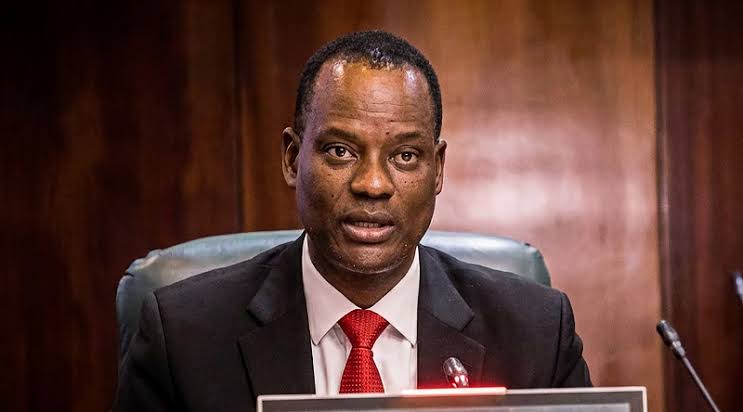

The Federal Government has unveiled plans to establish a National Skills Database aimed at reducing unemployment, addressing skills shortages, and strengthening workforce planning through data-driven policies.
The proposed database, which will underpin a Nigerian Skills Observatory, is expected to provide real-time information on the demand and supply of skills across sectors, enabling more effective job matching, evidence-based policymaking, and targeted investment in workforce development.
The initiative was announced on Tuesday at the second National Skills and Industry Alignment Roundtable Series in Abuja, themed The Role of Data in Job Creation, Coordination and Linkages.
Speaking at the event, Special Assistant to the President on Workforce Development, Rimam Nuhu, said the National Council on Skills, chaired by Vice President Kashim Shettima, would rely on data generated by the observatory to formulate workforce development policies.
“At the most foundational level, the Skills Observatory is to create a database on the demand and supply of skills,” Nuhu said.
“Skills development is an input for job creation. We have a labour market where there are significant skills mismatches. Understanding exactly where those shortages exist will help us plan better and improve workforce planning.
“Ultimately, that contributes to a more productive economy.”
Nuhu said the database would also help answer longstanding questions about whether Nigeria is experiencing a shortage of skilled workers or a mismatch between available skills and labour market demand by providing reliable evidence to guide policy interventions.
Delivering the keynote address, Group Chief Economist and Managing Director of Research and Trade Intelligence at Afreximbank, Yemi Kale, said Nigeria’s labour market challenge is no longer the absence of data but the inability to transform existing information into actionable intelligence.
“The challenge for us as a nation is not one of data accumulation. It is one of data integration and intelligence,” Kale said.
He noted that although government agencies, educational institutions, and the private sector already generate substantial volumes of data on education, employment, wages, and skills development, the information remains fragmented, limiting effective labour market planning.
“Data tells you what exists. Intelligence tells you what is happening, what is likely to happen next, and what actions should be taken,” he said.
Kale said the disconnect has left employers struggling to fill vacancies in critical sectors despite persistently high levels of unemployment and underemployment.
“The problem is that employers are searching, workers are searching, policymakers are searching, and investors are searching independently rather than collectively. Opportunities that should be visible remain hidden because the information needed to connect them is fragmented,” he said.
According to Kale, this fragmentation has created structural inefficiencies that discourage investment, reduce productivity, and prevent Nigeria from fully harnessing the potential of its youthful workforce.
He urged policymakers to align education, skills development, and workforce planning more closely with industry needs, describing Nigeria’s young population as a strategic economic asset capable of driving sustainable growth.
Earlier, Senior Special Assistant to the President on Coordination and Delivery, Akubo Adegbe, said the roundtable was convened to address the fragmentation of labour market information across government institutions and the private sector.
“If our first Roundtable challenged us to better align skills with industry, this second Roundtable challenges us to better align information with action,” Adegbe said.
Also speaking, Head of Cooperation at the European Union Delegation to Nigeria and ECOWAS, Massimo De Luca, said the European Union would continue to support Nigeria’s efforts to build a labour market capable of meeting investors’ workforce needs.
“We have a shortage of skilled labour when it comes to major investment projects. On the other hand, we have a great deal of untapped talent that is not adequately recognised.
“Those are realities that investors take into account,” De Luca said.
The Federal Government’s initiative comes as Nigeria continues to grapple with high unemployment and persistent skills mismatches, with many graduates unable to secure employment even as employers report difficulties recruiting suitably qualified workers in critical sectors.