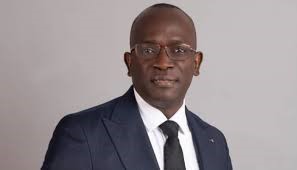
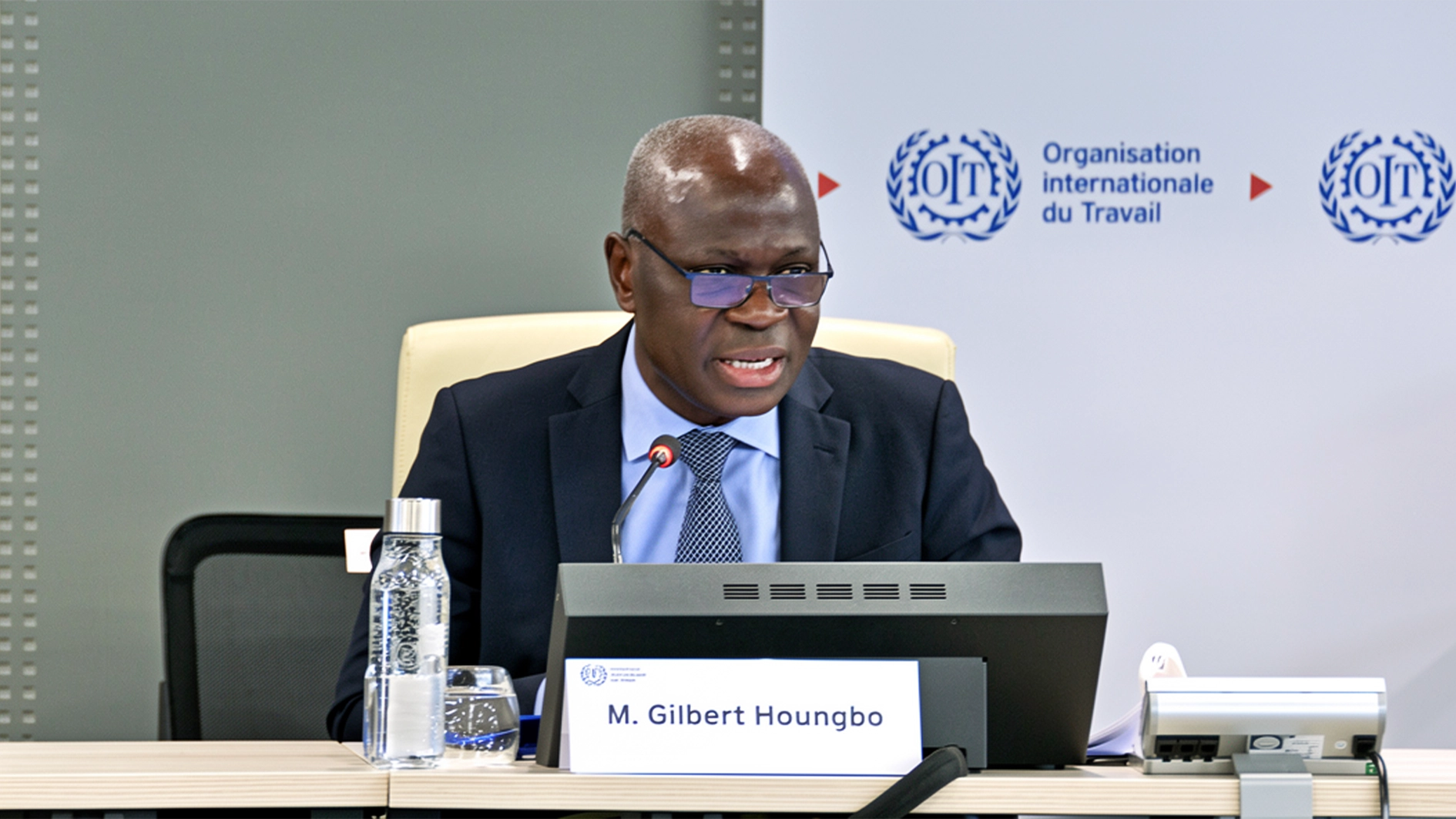
The Director-General of the International LabourOrganization (ILO), Gilbert F. Houngbo, has called on governments, employers’ and workers’ organisations, financial institutions, and development partners to strengthen support for micro-, small, and medium-sized enterprises (MSMEs), describing them as critical to job creation, decent work, and sustainable economic growth.
In his message marking the 2026 International Micro-, Small and Medium-sized Enterprises (MSME) Day, Houngbo said MSMEs account for more than 90 per cent of businesses worldwide and provide two out of every three jobs. He stressed that stronger policies, increased investment, and closer partnerships are essential to help these businesses overcome mounting economic challenges and seize opportunities presented by the digital and green transitions.
Houngbo noted that millions of MSMEs, alongside entrepreneurs, employers, and workers, continue to play a vital role in supporting economies and communities through innovation, enterprise, and hard work.
He said MSMEs create employment opportunities, strengthen local economies, foster innovation, and contribute directly to sustainable development and social progress worldwide.
However, he observed that many of these businesses are operating in an increasingly challenging environment, characterised by economic uncertainty, geopolitical tensions, climate-related shocks, persistent inequalities, and tighter financial conditions.
According to him, MSMEs are also under growing pressure to adapt to rapid technological change and the global transition towards digital and green economies.
Despite these challenges, Houngbo said emerging technologies and digital tools offer significant opportunities for small businesses to improve productivity, resilience, and competitiveness. He added that such innovations can enhance business performance, expand market access, and create new avenues for growth.
He cautioned, however, that without adequate support, many enterprises—particularly those in developing countries, rural communities, and businesses led by women and young entrepreneurs—risk being left behind.
Houngbo reaffirmed the ILO’s commitment to placing MSMEs at the centre of its vision for inclusive and sustainable development, emphasising that enterprise success and social justice are mutually reinforcing.
According to him, MSMEs require an enabling business environment that encourages entrepreneurship, investment, innovation, and sustainable enterprise growth. This, he said, includes effective institutions, sound policies and regulations, improved access to finance, infrastructure and markets, as well as a skilled workforce capable of embracing digital and green transformation.
The ILO Director-General also stressed that resilient and sustainable MSMEs depend on safe and healthy workplaces, respect for labour rights, sustainable social protection, and strong social dialogue.
“Decent work is not only a social objective—it is also a foundation for enterprise resilience, productivity and long-term success,” he said.
Houngbo called for renewed commitment and stronger collaboration among governments, employers’ and workers’ organisations, financial institutions, development partners, and the private sector to create an environment in which MSMEs can thrive.
He urged stakeholders to expand access to affordable finance, strengthen digital infrastructure and skills, support business formalisation, promote innovation, remove unnecessary barriers to enterprise development, and create greater opportunities for MSMEs to participate fully in both local and global markets.
He concluded by reaffirming the importance of building more resilient, inclusive, and sustainable economies, stating that when MSMEs thrive, create decent work, and contribute to shared prosperity, societies as a whole move forward.