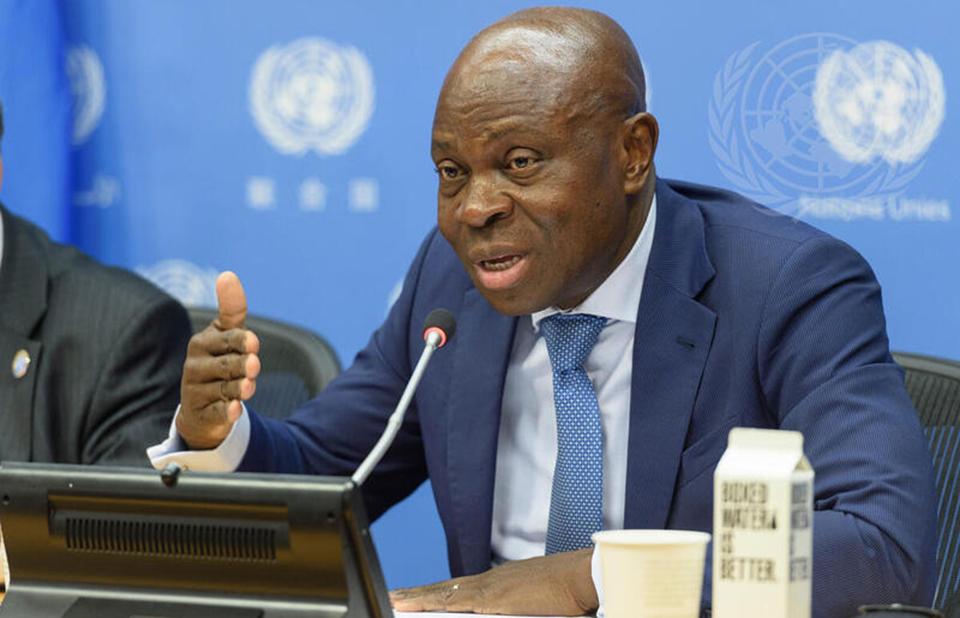
Director-General of the International Labour Organization (ILO), Gilbert F. Houngbo, has called for workers and human welfare to remain at the centre of the artificial intelligence (AI) revolution, warning that decisions taken today by governments, employers, and workers will determine whether the technology expands opportunity or deepens inequality worldwide.
Speaking at the opening of the 114th International Labour Conference (ILC) in Geneva, Switzerland, on Monday, Houngbo said the future of work would be shaped not by technology alone, but by the policies, institutions, and systems of social dialogue that govern its adoption and impact.
The conference, which runs until 12 June 2026, has brought together representatives of governments, employers, and workers from the ILO’s 187 member states to deliberate on emerging labour market challenges and opportunities.
“The future of work will not be determined by technology alone, but by the policies, institutions and social dialogue that guide it,” Houngbo said in his opening address.
Drawing on his report, A Moment of Choice: Harnessing Artificial Intelligence for Decent Work, the ILO chief advocated a human-centred approach to AI adoption. He outlined a four-point agenda focused on protecting workers’ rights, promoting jobs and skills development, strengthening social protection, and enhancing social dialogue.
Houngbo stressed that workers across the world must share fairly in the productivity gains generated by artificial intelligence. According to him, those benefits should be translated into improved wages, stronger labour protections, and more inclusive economic growth.
“Collective bargaining will be essential, alongside AI governance grounded in transparency, accountability and human oversight,” he said.
He warned that the choices made now would determine whether AI contributes to shared prosperity or exacerbates insecurity and inequality.
Beyond technological transformation, Houngbo linked the future of work to broader global economic and geopolitical challenges, noting that workers and employers are already operating in an increasingly uncertain environment.
“We meet at a time of profound uncertainty. The global economy remains fragile and the crisis in the Middle East has emerged as a major source of risk for workers, enterprises and communities,” he said.
He highlighted the impact of the crisis on seafarers navigating the Strait of Hormuz, migrant workers in Gulf countries, agricultural workers in southern Lebanon, and workers and businesses across multiple sectors in Iran.
According to ILO estimates, a prolonged oil shock could reduce global working hours by the equivalent of 14 million full-time jobs this year and 38 million next year. Labour income losses could reach as much as US$3 trillion by 2027, with the Arab States expected to experience the most severe effects, alongside wider repercussions across Asia and the Pacific.
The conference is also examining several labour market issues expected to influence the future of work globally.
Among them is a second discussion by the ILC Standard-Setting Committee on decent work in the platform economy, with the objective of developing new international labour standards. If adopted, the proposed measures would become the first international standards specifically addressing the impact of digitalisation on work.
The committee, comprising representatives of governments, employers, and workers, will consider draft texts for a proposed Convention and Recommendation covering employment promotion, worker protections for digital platform workers, and regulations governing automated systems used by digital labour platforms.
Another committee will focus on advancing gender equality in the workplace by addressing barriers that continue to restrict women’s participation and advancement in labour markets. Discussions will also examine policies required to promote inclusion amid technological, environmental, and demographic changes.
In addition, a committee on social dialogue and tripartism will explore how stronger collaboration among governments, employers, and workers can help manage digital transformation, demographic shifts, and widening inequality while strengthening labour governance and social justice.
The Committee on the Application of Standards is also scheduled to review the 2026 report on the application of labour conventions and recommendations, alongside discussions on employment and decent work as instruments for peace and resilience.
The outcomes of the conference are expected to shape future international labour policies and provide guidance on how governments, employers, and workers can navigate the opportunities and challenges presented by artificial intelligence and other transformative forces reshaping the global world of work.