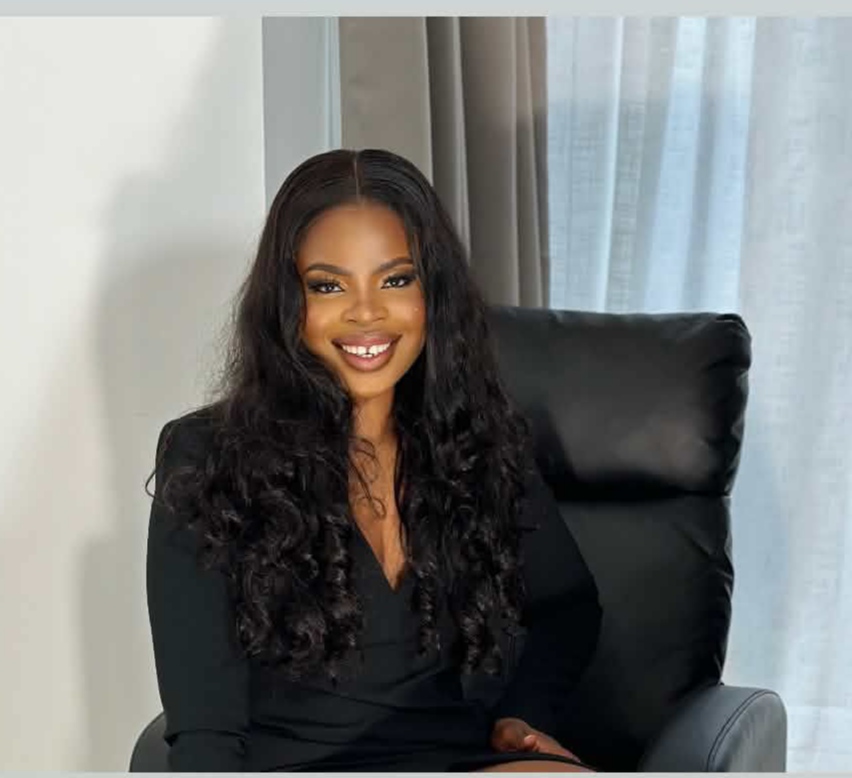
Ifechidere Edeafia is a global HR leader and Principal Consultant at Corporate Sense; an emerging management consultancy dedicated to bridging the gap between people strategy and operational excellence. With a career across various sectors like Oil & Gas, Legal, and Healthcare, she specializes in building the systems and cultures that allow companies to scale without losing their soul.
A UK-certified Foundation Chartered Manager (fCMgr) dedicated to global leadership standards. An award-winning innovator, Ifechidere was a recipient of the 2024 Global Recognition Award for her work in healthcare recruitment and management innovation. She holds a Master’s in International Business Management & Corporate Social Responsibility from Oxford Brookes University, where she also earned a spot on the Dean’s List for Academic Excellence. Her expertise is backed by extensive international strategic research, including international scaling analysis for a prominent South American company and a comprehensive diversification proposal for one of Nigeria’s largest diversified conglomerates.
Most recently, Ifechidere served as the Founding HR Consultant for a UK-based SaaS startup, where she built foundational people strategies and HR infrastructure from the ground up. Today, she is on a mission to re-engineer the Nigerian corporate landscape through Corporate Sense, proving that a healthy, sustainable culture is a business’s most significant competitive advantage.
In this exclusive interview with The HR Anchor, Ifechidere Edeafia explores how organisations can better align talent strategy, workplace culture, and leadership to build environments that not only drive performance, but also sustain their people over time.
Many organisations are under pressure to deliver results quickly. What does it look like to build a high-performing workplace that doesn’t come at the expense of people’s long-term sustainability?
Mariam, it’s really sad to see that many organisations still treat high performance and sustainability as opposites, and this is exactly why they rely on pressure as a performance tool.
So they believe that giving you tight deadlines will push you to perform. They also believe that productivity will not improve if they don’t keep you for long hours in meetings. In fact, every task in the office is urgent, and the person with the loudest voice of instruction wins. And while that can drive short-term results, it is not sustainable. If organisations want to build a high-performing workplace that doesn’t come at the expense of people’s long-term sustainability, they should first of all set clear expectations. People need to know exactly what winning looks like in their daily work. Even if they are writing meeting minutes or reports, what does that translate to in the bigger organisational goal?
Then another one is they need to start setting realistic workloads. What I’ve seen these days is that when managers see high performers, they overload them with lots of work because they feel like they are more important and they deliver, while neglecting their other teammates. So what happens is that the high performer is drained and mentally tapped out, and all of a sudden they might just want to leave.
Okay, so another point is that managers need to be equipped to lead. They need to know what it means to be a leader, and not just be a supervisor or someone trying to micromanage people, which is actually the worst-case scenario.
And also, apart from that, they need systems that support people. When people are complaining about certain things, organisations need to bring out systems that support people and not just drain them.
I always tell business leaders that businesses cannot be sustainable if the people running them are always empty, because you cannot pour from an empty cup. If your people have to burn out to deliver results, then your system is broken—you are not building a sustainable business.
Sustainable performance comes from, firstly, designing the environment where people can do their best work consistently, and not just temporarily.
When we talk about rethinking talent and culture today, what do you believe organisations are still getting fundamentally wrong about building workplaces that truly perform and sustain their people?
I believe one of the biggest things organisations are still getting wrong is treating performance and people as if they are separate conversations. Okay, so there is still this very strong focus on outputs, deadlines, KPIs, and deliverables, but not enough attention is given to the environment that actually enables that performance in the first place.
So you see organisations investing heavily in hiring talent, but not into the systems, or into their leadership behaviours, or even into the culture required to actually sustain those brilliant talents they have spent heavily to hire.
Another notable gap is that many organisations define culture aspirationally and not operationally. So they say things like, we value people, or we are collaborative, or we love innovative people, but those values are not reflected in day-to-day experiences—like how managers give feedback, how mistakes are handled, or even how workloads are structured and assigned.
So I’ve come to realise that performance issues are often not talent problems. Honestly, they are environmental problems. You cannot plant a seed in unhealthy soil and wonder why it didn’t grow. So until organisations start designing workplaces as intentionally as they design their business strategies, I think they will continue to struggle with both performance and retention problems.
How should organisations better align their talent strategies with workplace culture to not just attract talent, but also enable people to thrive and deliver consistent performance?
Alright, so alignment honestly starts with honesty. Organisations need to be very clear and honest about who they are internally before trying to attract talent externally. Because what often happens is that organisations sell one culture during recruitment, and people now experience something completely different after they join.
So to truly align their talent and culture, organisations need to integrate their culture into every stage of their employee lifecycle—from job adverts, to hiring, to onboarding, to staff welfare, and performance management.
For instance, it’s not just about hiring the most skilled or the most talented candidates. We need to start asking questions like: will this person thrive in this environment? And is this environment even set up for them to actually thrive and succeed?
At Corporate Sense Limited, that’s my company, we approach this by helping organisations connect three things. We connect their talent strategy to their leadership behaviours and to their employee experience. Because when those three things are aligned, you don’t just attract talent—you create an environment where people can actually perform consistently and stay.
For HR professionals who want to drive meaningful change in talent and culture but feel limited by organisational constraints, what are some practical starting points that can create real impact?
I completely understand that challenge because I have lived that experience. Most HR professionals struggle with this because they are working within systems they didn’t design. So a lot of work is needed to restructure a culture you didn’t create in the first place.
I want to let them know that meaningful change doesn’t always start big—it starts intentionally. So they can start by first listening more intentionally to employees. HR is not just armchair HR nowadays—you have to listen, get into conversations, and even do surveys to understand the pain points of staff.
You know, identify maybe one or two pain points the things staff are always complaining about and start addressing them consistently, maybe in meetings or policies.
Then, for example, improving onboarding alone can significantly change employee experience. Because most times, people get into a job, and because they are hired as the best talent, they are just left to find their way. Starting from there can actually help.
Then another important step is influencing leadership, because that’s very important. And you can only do that through data and storytelling. Because leaders’ primary objective is to build a sustainable business, so if you’re not talking numbers and impact, they may not fully engage.
You have to be able to connect people’s challenges to business outcomes. If people are calling in sick often, how is that affecting the business? Is mental wellbeing being neglected? What is it costing the company?
So I will always encourage HR professionals to start where they have influence. Because you cannot just wait to have full control before making an impact. Small, consistent improvements can actually build momentum for organisational change.
Looking ahead, what will define organisations that successfully build workplaces that both perform and sustain people and what should HR professionals start doing differently now to prepare?
The winners are the ones that will move from just being employers to being what I call “talent keepers.” There will be many businesses, but the winners will be the ones that understand that people are not just resources—they are central to performance.
What will define these organisations is the ability to build intentional cultures. You are developing your leaders, training them, making sure they are emotionally intelligent, and designing systems that support both performance and wellbeing.
You are not just focused on business strategies—you are also focused on people. Because we are moving into a world where employees are more aware, more vocal, and more selective about where they work.
So organisations can no longer rely on just compensation or brand—they need to offer meaningful work experiences.
For HR professionals, it means we need to start shifting from being operational to being more strategic. We need to think beyond policies, focus on employee experience design, and become strong advisors to leadership.
It’s not just about sitting in meetings and relaying instructions—we need to contribute meaningfully.
At my company, Corporate Sense, it is our mission to bridge that gap, helping organisations build workplaces where performance and people are not competing priorities, but aligned.
What advice do you have for HR professionals who have tried to drive change but are not seeing meaningful results?
Honestly, I think I really struggled with that a lot. There’s this saying that if you can’t beat them, you join them, and I think that mindset has made some people stop trying to implement change. But that is really not good. Because over time, you begin to absorb that same culture yourself. If you are trying to make a change and nothing is shifting, you may start behaving like the system you wanted to change.
I don’t like to stay in environments where my values do not align. And that’s why some people say they left their previous jobs because their values didn’t align.
Because you can’t keep telling people the right way to do things while they insist on doing things differently. If your values do not align with that company, I don’t think you should be the one driving their vision and mission.
So you just have to be strategic and know the best time to find something more sustainable for yourself. Because it’s not just about building businesses—we also want personal and professional growth.
if it’s not aligning with you, then maybe it’s time to reflect and decide what you truly want for yourself.