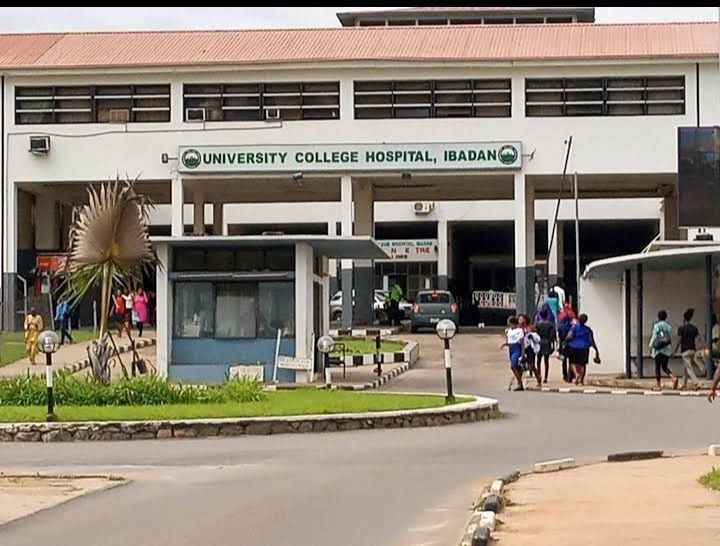
Healthcare services at the University College Hospital (UCH), Ibadan, were disrupted on Monday after workers commenced a five-day warning strike to protest what they described as deliberate internal electricity rationing by the hospital management.
The strike, declared by the Council of UCH Union Leaders (CUUL), followed weeks of complaints over restricted power supply to critical service areas and residential quarters — a situation staff say has adversely affected working conditions and patient care.
Addressing journalists at the hospital, union leaders said the industrial action became inevitable after repeated representations to management failed to yield improvements. They alleged that the rationing had disrupted service delivery, leading to cancelled surgeries, delayed laboratory investigations, and the malfunctioning of essential medical equipment.
The affected unions include the Association of Resident Doctors, the Medical and Health Workers Union of Nigeria, the National Association of Nigeria Nurses and Midwives, the Nigerian Union of Allied Health Professionals, the Non-Academic Staff Union, and the Senior Staff Association of Universities, Teaching Hospitals, Research Institutes and Associated Institutions.
Co-Chairman of CUUL and Chairman of JAC-UCH, Mr. Oladayo Olabampe, alongside Dr. Uthman Adedeji, Co-Chairman of CUUL and Chairman of ARD-UCH, accused the hospital management of failing to prioritise uninterrupted electricity supply to life-saving units, saying the situation had severely constrained healthcare workers in the discharge of their duties.
In a joint statement titled “Let There Be Light”, the unions said service delivery areas had been subjected to internal electricity rationing for several months. They alleged that operating theatres had been thrown into disarray, medications and vaccines had been lost due to broken cold chains, and research activities had slowed owing to unstable power supply.
The unions further warned that the situation had created serious safety concerns for workers and patients alike. According to them, some surgical procedures were conducted with the aid of headlamps, nurses relied on mobile phone torchlights while attending to patients in wards, and laboratories handled hazardous samples without fully functional extraction systems.
They also lamented that the electricity crisis had resulted in severe water shortages within the hospital, as pumping systems depend on power supply. This, they said, heightened the risk of hospital-acquired infections and raised security concerns for staff working night shifts.
The workers demanded an immediate end to internal power rationing, restoration of water supply to hospital facilities and residential areas, urgent replacement of faulty electricity meters, and reversal of the newly introduced rent structure.
They called on the Federal Ministry of Health and Social Welfare, the Federal Ministry of Power, and the Federal Government to intervene urgently to prevent further deterioration of services at the hospital, which they described as one of Nigeria’s foremost tertiary health institutions.
As of press time, the management of UCH had not issued an official response to the allegations.