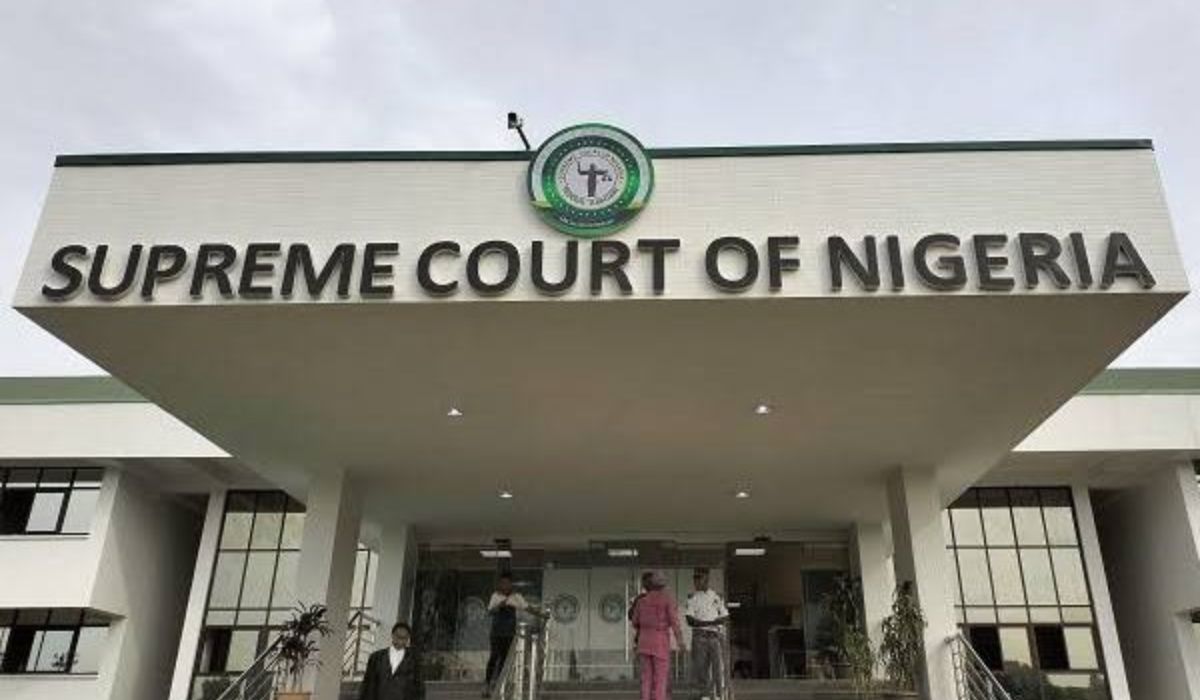
The Supreme Court of Nigeria has delivered a landmark judgment clarifying the jurisdiction of the National Industrial Court of Nigeria (NICN) in handling defamation cases that arise from employment disputes.
The ruling resolves years of conflicting decisions by the Court of Appeal regarding the NICN’s authority to adjudicate defamation claims originating from employment relationships.
The case, referred to the Supreme Court by the Lagos Division of the Court of Appeal, involved a dispute between Emma Elegbe and Lolu Elegbe against HP International School Ltd and others (appeal number SC/CV/899/2025).
Delivering the lead judgment, Justice Stephen Adah emphasised that tortious claims, including defamation, do not automatically fall within the scope of labour and employment matters as contemplated by Section 254C of the Constitution. He stated that such cases are properly justiciable before the regular courts upon a substantive examination of the alleged defamatory publications.
However, Justice Adah explained that the decision does not exclude all tort claims from the NICN’s jurisdiction. Instead, it establishes “a principled and context-sensitive distinction grounded in the pleadings and the constitutional scope of Section 254C.” He added that determining jurisdiction is fact-sensitive and requires a close examination of the true nature of the dispute.
The ruling sets out two key scenarios. First, where a defamation claim is closely tied to an employment contract, the NICN can handle it. Second, where a defamation claim exists independently and involves parties outside the employer-employee relationship, it should proceed before a state High Court.
The court stated: “Where a defamation claim exists independently… and is directed against a party outside the employer–employee relationship, such a claim falls outside the NICN’s constitutional remit.”
The judgment is expected to provide much-needed clarity and guidance for future cases, marking a significant step forward in Nigerian employment law. TEMPLARS, a law firm, participated as amicus curiae in the proceedings.