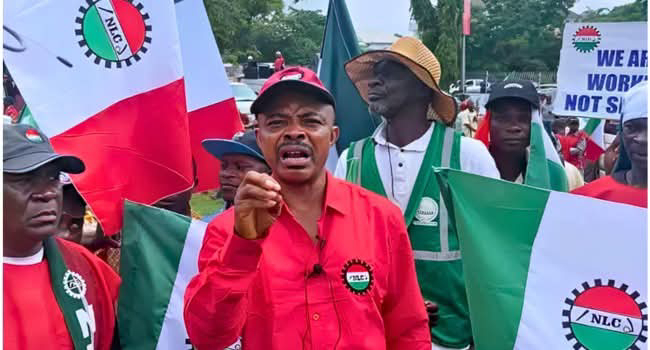
The Nigeria Labour Congress (NLC) has urged the Federal Government to urgently address workers’ wages and ensure the full implementation of the new national minimum wage, warning that delays and uneven compliance are worsening economic hardship for Nigerian workers.
The call was made on Wednesday by the NLC President, Mr. Joe Ajaero, who said many workers are yet to benefit from the ₦70,000 minimum wage signed into law in July 2024.
Mr. Ajaero said that despite the clarity of the law, several state governments, private-sector employers, and public institutions have failed to comply, often citing financial constraints and the pressure of rising inflation.
“The law is clear, yet many workers still earn less than they are entitled to,” he said, adding that the situation has left workers struggling to cope with soaring living costs.
He warned that unless the Federal Government takes urgent steps to address wage issues ahead of the next statutory minimum wage negotiation, workers’ welfare would continue to deteriorate.
According to him, the labour movement is monitoring violations and is prepared to pursue enforcement measures, including legal action, against defaulting employers.
The NLC President also criticised recent tax policies, describing them as regressive and disproportionately burdensome for workers and low-income Nigerians.
“These tax laws went through a process that excluded Nigerian workers, who are among the major taxpayers in the country,” Mr. Ajaero said. “The outcome is policies that make workers and the poor poorer.”
He urged the government to review the tax regime and adopt policies that protect workers’ incomes rather than erode them, particularly at a time of high inflation and declining purchasing power.
Mr. Ajaero further stressed the need for meaningful engagement between the government and organised labour on economic policies affecting workers, including wages, taxation, and social protection.
“Policies on wages and taxation must be crafted with the active input of those who represent workers,” he said, warning that excluding labour from policymaking would lead to instability and deeper hardship.
He concluded by urging the government to prioritise workers’ welfare, enforce existing wage laws, and pursue economic reforms that guarantee income security and decent living standards for Nigerian workers.