
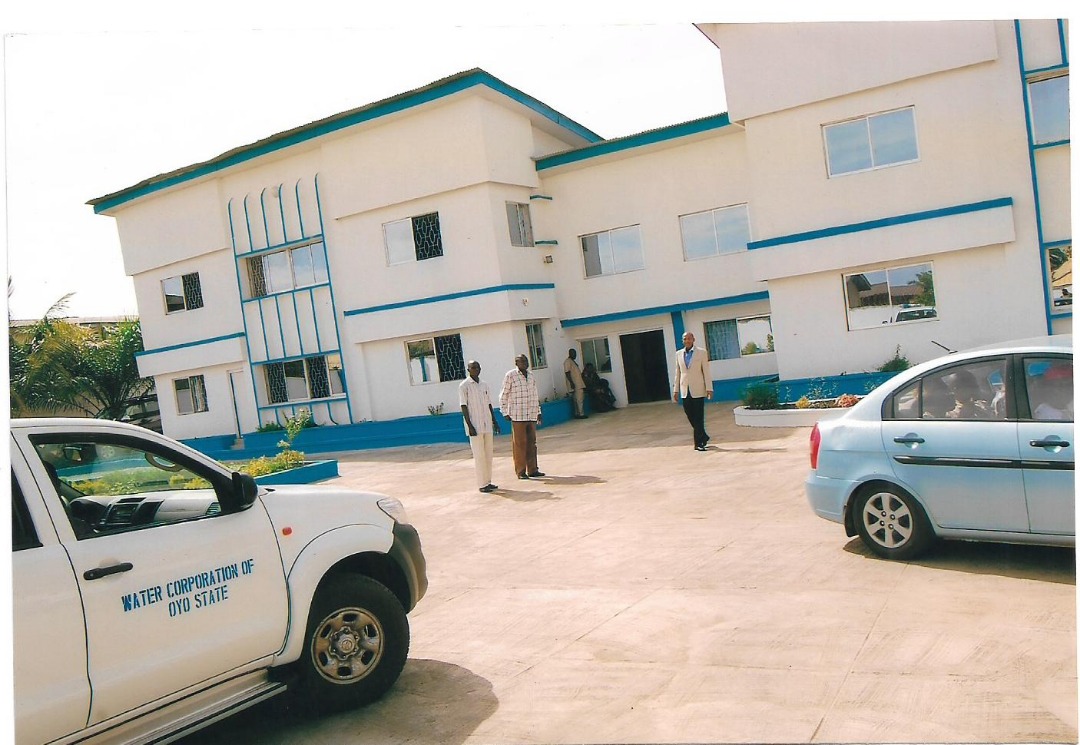
The National Industrial Court of Nigeria sitting in Ibadan has dismissed a suit filed by Mrs. Oluyemisi Asunmo against the Water Corporation of Oyo State, the Attorney-General and Commissioner for Justice, and the Oyo State Pensions Board. Delivering judgment, Hon. Justice Yakubu Hassan held that the case was filed outside the time permitted by law, rendering it statute-barred and depriving the court of jurisdiction.
The court found that Asunmo filed the suit in October 2017, several years after her retirement in 2012, thereby exceeding the five-year period prescribed under the Limitation Law of Oyo State. The judge explained that this delay extinguished her legal right to pursue the claims, leading to the dismissal of the entire suit.
According to the facts before the court, Asunmo stated that she was employed by the Water Corporation of Oyo State in 1977, and her appointment was confirmed in 1979. She said she rose through the ranks to become a Senior Officer before she was suspended in August 2000 over allegations of misconduct.
She added that she was subsequently charged before the High Court of Oyo State, where she was discharged and acquitted. She further stated that an appeal filed against her acquittal was dismissed. Despite this, she maintained that the corporation neither recalled her from suspension nor paid her entitlements until she reached retirement age in 2012.
On this basis, Asunmo asked the court to declare her prolonged suspension without pay unlawful. She also sought payment of accumulated salaries, allowances, gratuity, pension arrears, leave allowances, and lifetime pension. In addition, she claimed interest on the judgment sum and general damages, putting the total claim at over ₦17 million.
In their defence, the Water Corporation of Oyo State and the other defendants contended that the claimant was never dismissed but had absconded from duty. They stated that she failed to respond to several official invitations and communications issued to her.
Counsel to the defendants argued that the action was commenced many years after the events in question and urged the court to dismiss it for being statute-barred.
However, counsel to the claimant opposed this argument. He informed the court that the defendants had earlier taken his client to court, resulting in a ruling in 2014 and a subsequent appeal. He argued that, in the circumstances, the limitation law should not apply and urged the court to act in the interest of justice.
In his judgment, Justice Hassan stated that limitation of action is a jurisdictional issue that may be raised at any stage of proceedings. He explained that it need not be specifically pleaded before it can be relied upon.
The judge clarified that Asunmo’s suspension in 2000 did not terminate her employment and, therefore, was not the starting point for her claim. Rather, he held that the cause of action arose in 2012, when she reached retirement age while still on suspension.
He further explained that Asunmo ought to have approached the court promptly after her retirement, noting that filing the case in 2017 exceeded the five-year limitation period prescribed by law.
Justice Hassan also rejected the argument that the criminal proceedings delayed her right to institute a civil action. He noted that criminal and civil proceedings can run concurrently and that the pendency of the criminal case did not preclude her from filing a civil claim earlier.
In conclusion, the court dismissed the entire suit and ordered that each party bear its own legal costs.