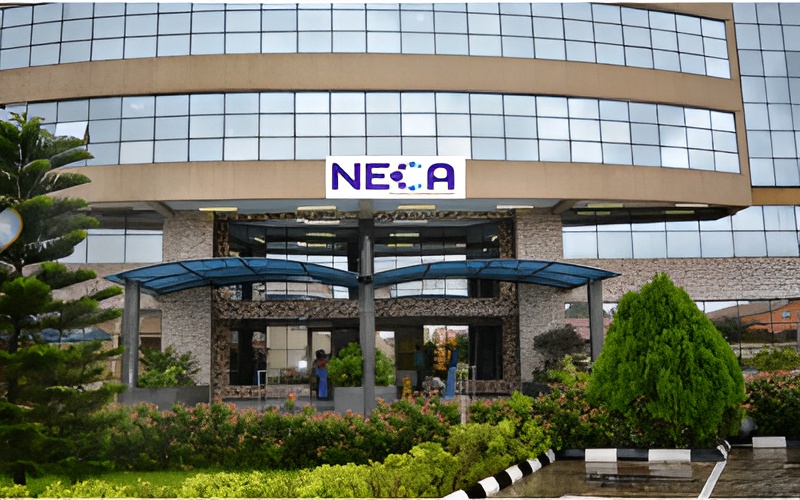

The Federal Government has pledged support for the Nigeria Employers’ Consultative Association (NECA) to strengthen industrial courts and arbitration panels, in a bid to protect workers and ensure the swift resolution of workplace disputes.
The commitment was made on Friday in Abuja by the Minister of Labour and Employment, Muhammad Dingyadi, at the fourth International Labour Adjudication and Arbitration Forum, convened to improve access to labour justice in Nigeria.
Speaking at the forum, themed “Access to Labour Justice in a Rapidly Changing World of Work,” Dingyadi, who was represented by the Director of Trade Union Services, Falonipe Amos, said the initiative would promote fairness, safeguard workers’ rights, support employers, and strengthen industrial harmony nationwide.
He noted that reinforcing industrial courts and arbitration panels would accelerate dispute resolution and reduce tensions in workplaces. “Accessible and efficient labour justice is critical for productivity, social stability, and confidence in the workplace,” Dingyadi said.
The minister added that the Federal Government remained committed to the timely resolution of disputes and encouraged the adoption of alternative dispute resolution mechanisms to minimise delays and reduce high litigation costs.
According to him, modernising labour laws and strengthening adjudicatory institutions align with the administration’s Renewed Hope Agenda, aimed at advancing social justice and economic growth.
Dingyadi urged employers, workers, and government agencies to collaborate to ensure that labour justice remains timely, fair, and inclusive. He emphasised that a robust dispute resolution framework is vital to national development, workplace trust, and long-term industrial peace.
Also speaking, the Director-General of NECA, Adewale-Smart Oyerinde, observed that access to labour justice had largely centred on workers, while the interests of employers and government were sometimes overlooked.
He stressed that labour justice must serve all stakeholders and move beyond a solely worker-focused approach to encompass the broader industrial ecosystem.
Oyerinde said consensus-building requires mutual respect among employers, workers, and the judiciary, supported by prompt decisions at the National Industrial Court of Nigeria.
While acknowledging that workplace conflicts are inevitable, he maintained that sustained dialogue and the narrowing of disputes would strengthen industrial relations.
He added that the forum would evolve into workshops and knowledge-sharing sessions designed to deepen understanding and foster a more prosperous labour ecosystem.
Oyerinde also questioned why some labour disputes are taken to regular courts despite the existence of specialised industrial courts, urging stakeholders to utilise appropriate adjudication channels.
He highlighted the importance of tripartism and education, noting growing awareness among members of the judiciary and lawmakers regarding global labour practices.
In his remarks, the Chairman of the Senate Committee on Labour and Employment, Diket Plang, underscored the need for modern, coherent, and enforceable labour laws that reflect contemporary workplace realities.
He said the legislature is engaging stakeholders to identify gaps and support reforms aimed at strengthening labour institutions and social protection systems.
Meanwhile, the Director-General of the Michael Imoudu National Institute for Labour Studies, Mr. Isa Aremu, stated that access to labour justice depends significantly on knowledge and understanding.
Mr. Aremu urged workers, employers, and union leaders to understand their rights and obligations. He emphasised that skills in collective bargaining, mediation, and arbitration are essential, adding that the institute remains committed to training, research, and the peaceful resolution of workplace conflicts.
He said strengthening capacity across the labour sector would help reduce disputes and promote lasting industrial peace in the country.